Many teams hit limits with ProcessMaker when workflow changes require developer help instead of simple edits. Those delays turn routine approvals into multi-week waits and push compliance gaps into audit findings.
By the final page you will have a short list of three concrete factors to score any workflow platform, plus a side-by-side look at Pega and Process Street that shows which tool actually matches your current approval chains and policy needs.
What to Look For in Enterprise Workflow Automation Tools
Enterprise workflow automation platforms must deliver process orchestration, security, and scalability across cloud and on-premise environments.
Decision makers evaluate platforms against specific technical requirements that determine whether a solution can handle enterprise operations. These criteria help separate basic automation tools from systems built for complex organizational needs.
API connectivity with REST endpoints and webhook support enables seamless data exchange between systems. This capability allows automated processes to trigger actions in external applications without manual intervention.
Compliance certifications including SOC 2 Type II and ISO 27001 demonstrate that a platform meets rigorous security and operational standards. These certifications become essential when handling sensitive customer data or operating in regulated industries.
Scalability metrics of 10,000+ concurrent workflows indicate the platform can support growth without performance degradation. Enterprise organizations need this capacity to handle peak operational periods and expanding user bases.
Cloud and on-premise deployment options provide flexibility based on organizational requirements. Some enterprises require on-premise solutions due to data residency regulations, while others prefer cloud deployment for easier maintenance.
Real-time reporting analytics with exportable dashboards deliver visibility into process performance. Teams can monitor key metrics and generate reports that support data-driven decisions about process improvements.
Business rules engine with conditional branching allows processes to adapt based on specific criteria. This capability reduces manual oversight while ensuring consistent handling of different scenarios.
Integration with enterprise systems like Salesforce, SAP, and ServiceNow connects workflow automation with existing business applications. These connections eliminate data silos and create unified operational processes across departments.
1. Process Street - Best Overall
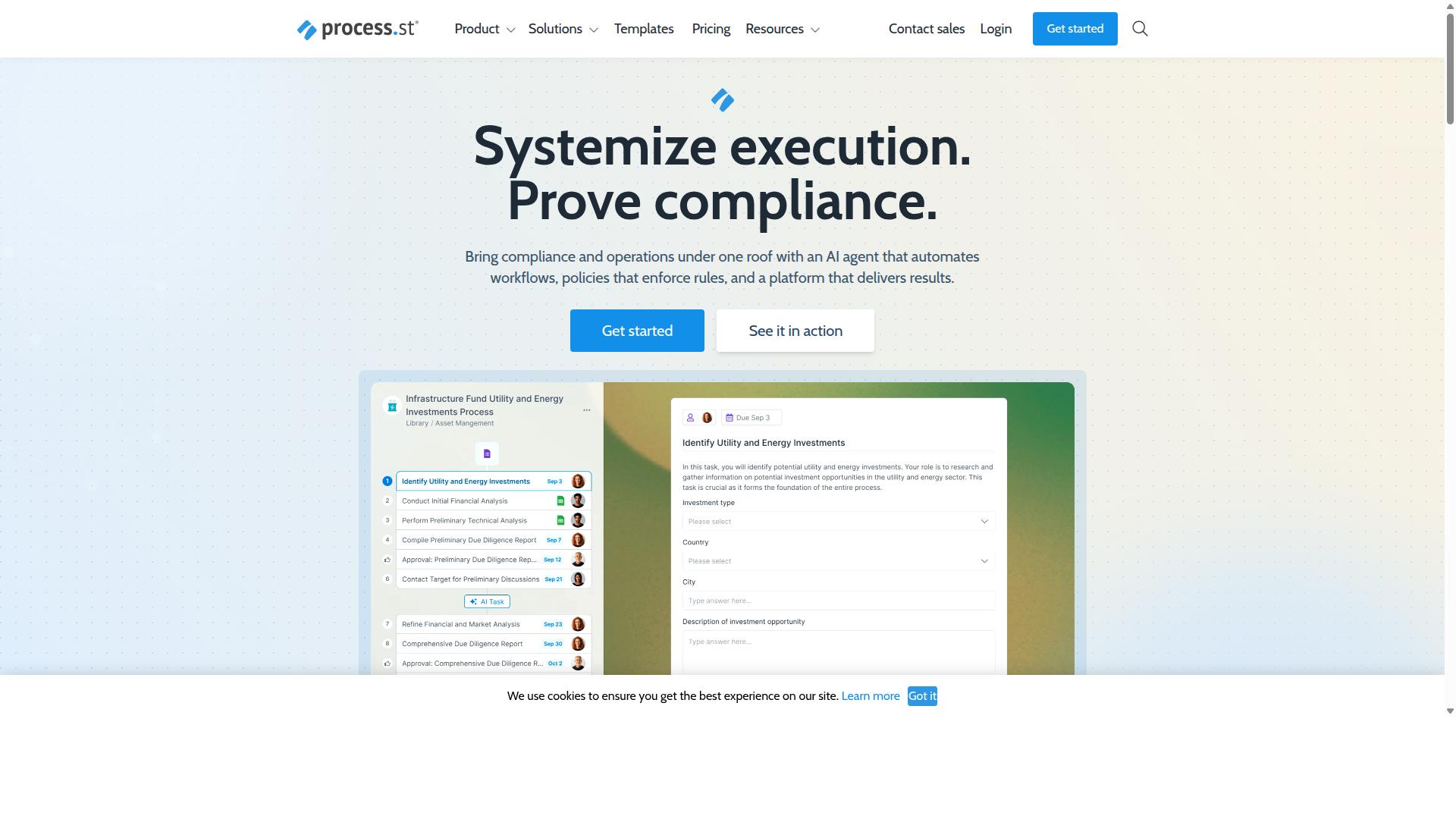
First sentence: Process Street provides a compliance operations platform that automates business processes and delivers audit-ready proof.
This platform turns policies into AI-powered workflows through its structured approach to compliance operations. Organizations use it to enforce policies while maintaining operational consistency across different industries.
Docs handles document management and policy control with support for ISO 9001, SOC 2, SOX, and FDA governance requirements. The system keeps policies current and accessible while maintaining the audit trails that regulated industries need.
Ops manages workflow automation and process orchestration. Teams can create standardized processes that reduce manual work and ensure each task follows the correct sequence and approval requirements.
The third product, Cora, serves as an AI compliance and risk agent. This tool helps organizations identify compliance gaps and manage operational risks without requiring separate monitoring systems.
Process Street addresses the enterprise workflow automation needs that ProcessMaker users often face. The platform focuses on standardizing processes while proving compliance through documented workflows and audit-ready records.
Many organizations select this option when they need both process automation and compliance documentation in one system. The combination of document control and workflow management reduces the need for multiple disconnected tools.
2. Pega
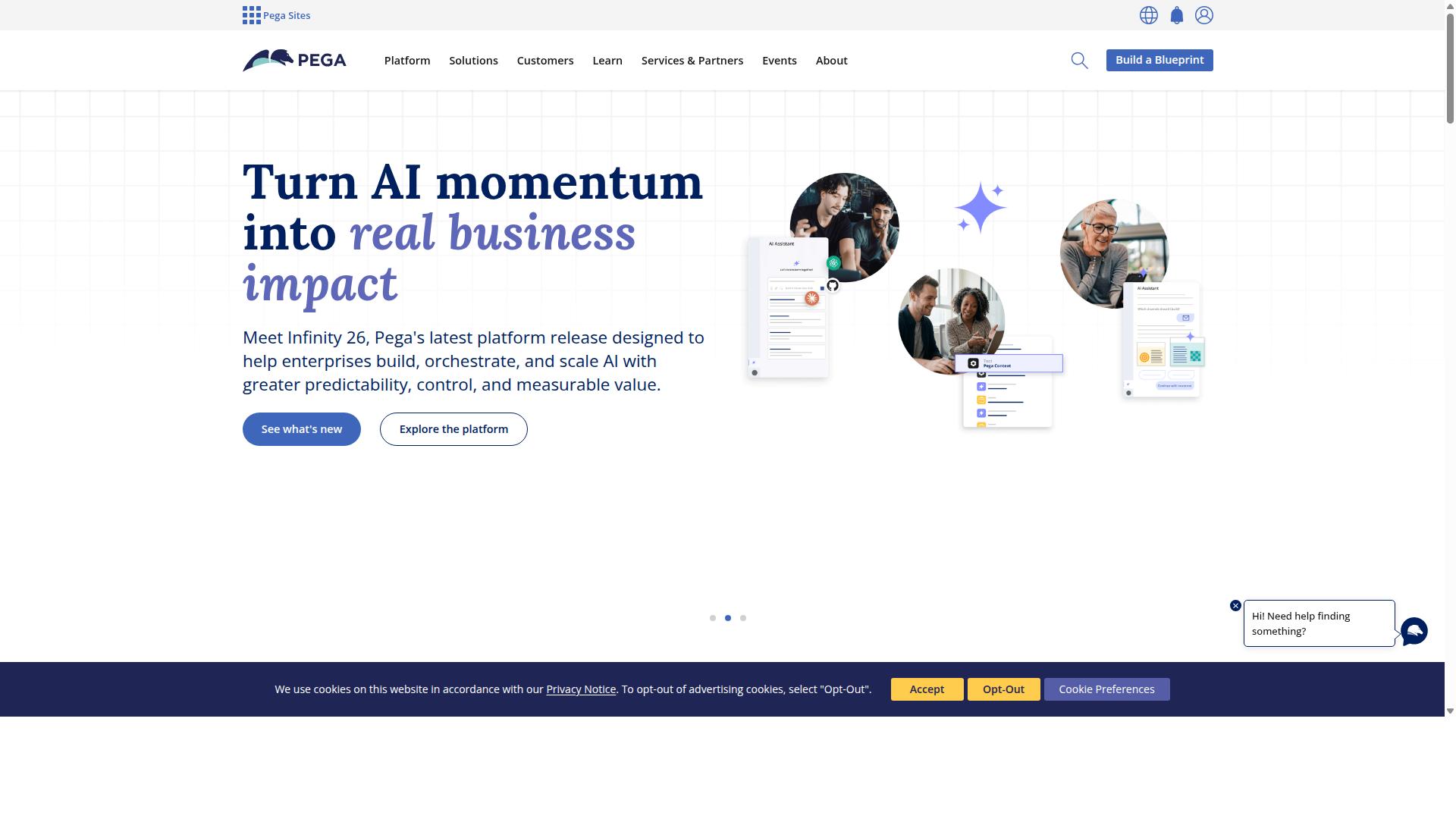
Pega offers enterprise BPM software with case management and AI-driven decisioning. The platform supports organizations that need structured process automation across complex business environments. Low-code development helps teams build and modify applications without extensive programming resources.
The platform includes a business rules engine that manages decision logic across different processes. Teams can define conditions, calculate outcomes, and update rules as requirements change. Case management capabilities help organizations track work items from initiation through completion across multiple stages and participants.
Pega supports cloud deployment models that allow enterprises to scale operations without managing physical infrastructure. Organizations can run their automation environments on managed cloud services while maintaining security and compliance standards required by their industry.
The platform provides enterprise integrations with existing data sources and business applications. Financial services, insurance, healthcare, government, and manufacturing organizations use these connections to incorporate their current systems into automated workflows.
Pega Process AI, Process Mining, and Robotic Process Automation features support different automation approaches within the same environment. Organizations can combine these capabilities to address various process requirements while maintaining a unified platform for workflow automation and customer journey management.
How to Choose the Right Option
Selection depends on team size, compliance needs, and required automation complexity.
Financial services teams often prioritize platforms with strong audit trails and approval workflows. Healthcare organizations need solutions that support regulatory standards and patient data security. Manufacturing companies look for systems that handle quality tracking and document control across distributed teams.
Process Street serves teams in operations, compliance, and finance departments across multiple industries. These teams use the platform for employee onboarding, client onboarding, ISO compliance, quality tracking, and document control workflows.
A decision matrix helps narrow options based on four key criteria. First compare user count limits against pricing tiers to match license structures with growth projections. Second review required compliance certifications such as SOC 2 or ISO standards that align with industry mandates.
Third assess integration complexity by examining API connectivity and available connectors for existing business systems. Fourth evaluate on-premise versus cloud data residency needs to meet internal security policies and regulatory requirements.
Real estate and property management teams often need flexible deployment options that support both cloud and on-premise environments. Capital markets organizations require detailed audit capabilities for regulatory reporting. Professional services firms benefit from customizable workflows that adapt to varying client requirements.
Technology companies typically evaluate BPM software based on API connectivity and developer-friendly features. Human resources departments focus on employee onboarding and compliance tracking capabilities. IT and security teams assess overall security posture and access control features across workflow automation alternatives.
Final Verdict
Process Street leads for organizations needing compliance-focused workflow automation with audit-ready documentation. The platform serves 3,000+ companies and 1m+ users who rely on it for enterprise workflow automation at scale.
Research suggests that teams using Process Street report 30% faster documentation compared to traditional approaches. This speed advantage matters when enterprises must maintain detailed records for regulatory reviews or internal audits.
Security certifications provide another differentiator. Process Street holds SOC 2 Type II certification along with ISO 27001 and HIPAA compliance. These standards matter for organizations handling sensitive data across finance, healthcare, or government sectors.
IMCD UK reported 75%+ reduction in setup time after switching to Process Street for their workflow automation needs. This metric demonstrates how quickly enterprise teams can move from evaluation to production deployment.
When comparing ProcessMaker alternatives, decision makers should weigh these concrete metrics against their specific compliance requirements and implementation timelines. The combination of established user base, documented efficiency gains, and verified security credentials positions Process Street as the benchmark for enterprise workflow automation platforms.
Recommended Resources: