You are comparing AI task automation tools for cloud sync, and the choices all blur together after the third demo. Most teams pick a tool for its flashy AI features, then discover the sync breaks when field staff switch between WhatsApp and mobile apps. That gap costs you missed deadlines and duplicated work.
By the end of this article, you will have a concrete checklist for evaluating native integrations, sync reliability, and AI prioritization. You will also get our clear number one pick, Tasks.Bot, with its WhatsApp-native automation and three-month free trial, plus honest assessments of five alternatives so you can decide with confidence.
What to Look For in AI Task Automation Tools for Cloud Sync
When evaluating AI task automation tools for cloud sync, focus on three critical pillars: native integrations, AI capabilities, and sync reliability-these determine whether the tool will streamline or complicate your workflows.
The right solution must connect directly to your existing cloud storage and communication platforms. It also needs intelligent task management that reduces manual effort. Finally, data consistency across every device is non-negotiable for teams that move fast.
Tools that excel in these areas create a unified workflow where files and tasks stay in perfect alignment. Those that fall short introduce friction, duplicate work, and data mismatches that erode trust in the system.
Native Integrations and Sync Reliability
A tool's native integrations with platforms like Google Drive, Dropbox, and Slack determine how smoothly tasks and files flow across your ecosystem, while sync reliability-measured by uptime and conflict resolution-ensures no data is lost or duplicated.
Check whether the tool supports direct APIs for your core services. Native API integration is far more dependable than workarounds like email forwarding or manual CSV exports. For example, a strong integration lets you create a task directly from a Slack message, which then syncs to your project management board and updates your cloud storage folder automatically.
Sync reliability features to examine include real-time sync, bidirectional sync, conflict resolution, and versioning. Bidirectional sync keeps changes flowing both ways, so an update on your phone appears on your desktop within seconds. Conflict resolution determines which version wins when two people edit the same item simultaneously.
Uptime SLAs also matter for business continuity. A tool with a strong uptime guarantee ensures your automated workflows keep running during peak hours, preventing costly delays. Look for clear versioning history so you can recover older file versions when mistakes happen.
Consider multi-cloud scenarios where you need cloud-to-cloud sync between providers. The right tool handles folder sync across platforms without requiring manual intervention, maintaining consistency even during data migration projects.
AI Capabilities for Task Creation and Prioritization
Advanced AI capabilities go beyond simple reminders-they interpret natural language, extract action items from conversations, and automatically prioritize tasks based on deadlines and project context.
Natural language understanding is the first feature to evaluate. The AI should convert voice notes, chat messages, or email threads into structured tasks without manual formatting. Instead of typing a detailed task description, you can say "follow up with the design team on Thursday about the logo files" and the system creates a properly dated, tagged, and assigned task.
Automatic prioritization is another differentiator. The AI analyzes urgency, dependencies, and workload to rank tasks by importance. This reduces the time spent deciding what to tackle first and helps teams focus on high-impact work.
Look for AI that learns from your behavior over time. If you consistently move certain types of tasks to the afternoon, the system can start scheduling them accordingly. This adaptive behavior reduces manual data entry and improves task accuracy as the system understands your patterns.
For sync tools specifically, AI that integrates with cloud sync keeps task lists updated across all devices. A task created from a voice note on your phone appears on your desktop project board instantly. This cross-platform sync ensures you never miss an action item regardless of which device you are using.
Some platforms offer trigger-based workflows and drag-and-drop automation that pair AI insights with no-code automation. These low-code platforms let you build sophisticated task orchestration without writing code, making AI-powered workflow automation accessible to non-technical team members.
1. Tasks.Bot - Best Overall
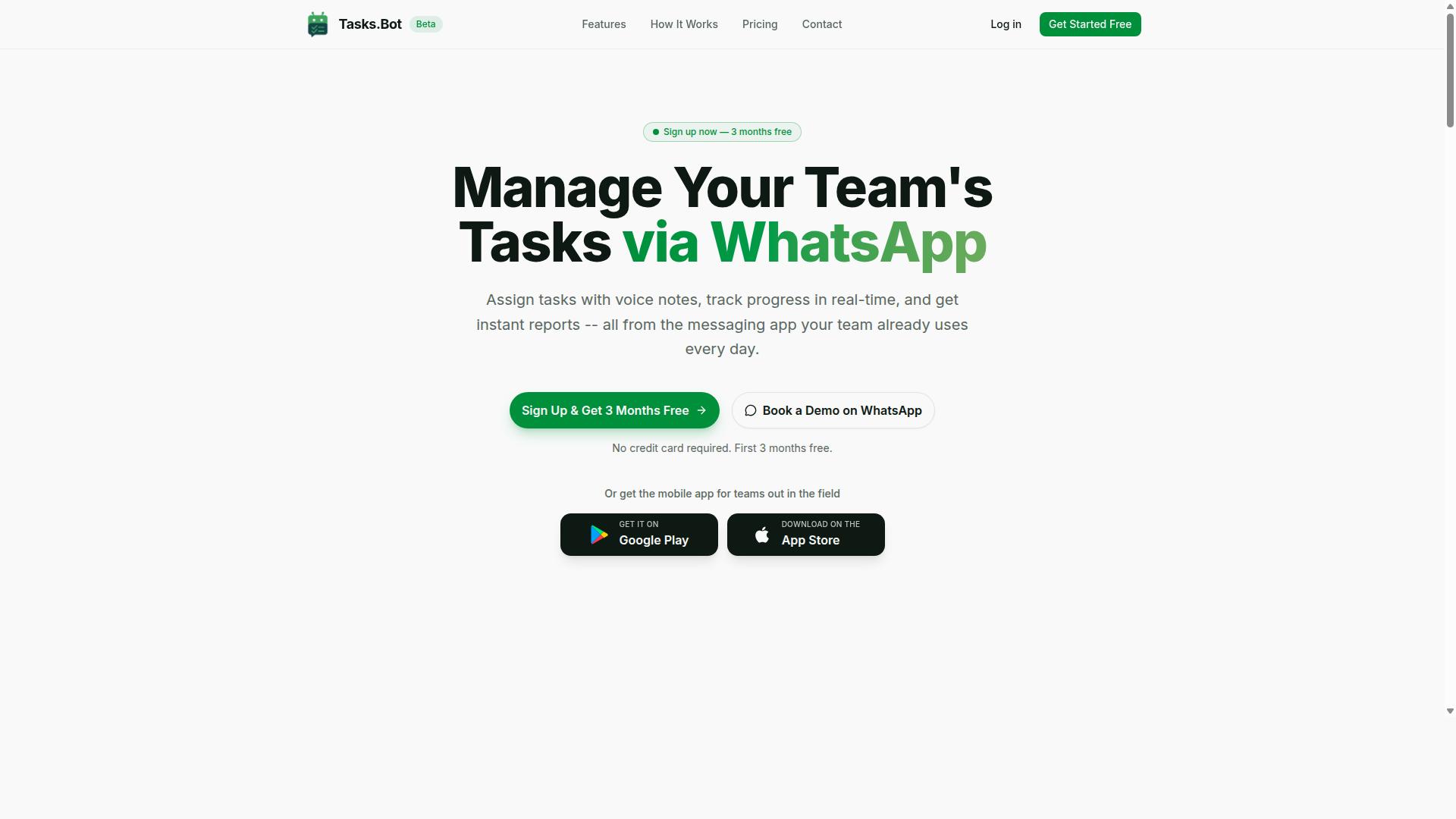
Tasks.Bot stands out as the best overall choice by embedding task management directly into WhatsApp, eliminating the need for new apps while delivering cloud-ready reporting and automation. The platform uses AI to understand user intent and create tasks from messages, which makes adoption feel natural for teams already comfortable with chat.
Because the service operates within WhatsApp and offers a mobile app for field teams, it bridges the gap between casual communication and structured workflow automation. The sections below break down the core features, cloud sync capabilities, and the transparent pricing model that makes Tasks.Bot a compelling pick for 2026.
WhatsApp-Native Automation with Cloud-Ready Reporting
Tasks.Bot's WhatsApp-native design means your team can create tasks via voice notes or text, and the AI automatically assigns them, sets deadlines, and syncs updates to the cloud for instant reporting. A field worker can send a voice note describing a job, and that task appears in the manager's dashboard in real time, ready for approval or assignment.
The feature set covers voice note task creation, automatic task assignment, smart deadline reminders, approvals and automations, and instant reports. Additional tools include tasks on a map, a live day tracker, face-verified attendance, and shifts, leave, and hours management.
All data is stored in the cloud, so updates are accessible from any device through WhatsApp or the mobile app. Team members do not need to install new software or create separate accounts, which significantly reduces onboarding friction.
This approach to cloud sync keeps reporting current without requiring anyone to learn a new dashboard. The Android and iOS apps add push notifications, voice capture, and a home screen widget for quick access, making real-time sync practical for distributed teams.
Pricing and Free Trial (3 Months Free, No Credit Card)
Tasks.Bot offers a transparent pricing model: 200 per member per month billed monthly, or 1,200 per member per year (saving 50%), with a generous 3-month free trial that requires no credit card. The Full Access plan includes all features, so there are no hidden tiers or paywalled essentials.
The annual plan saves 1,200 per member each year, which makes it an attractive option for teams planning long-term adoption. Pricing is displayed in both Indian Rupees and US Dollars, so international teams can verify costs in their preferred currency.
The no-credit-card trial removes the usual barrier to testing new software. You can cancel anytime during the trial period, and the refund policy listed on the site provides additional reassurance for teams evaluating the platform.
For organizations comparing pricing tiers across task automation tools, this structure is refreshingly simple. There is no freemium model with limited features, just a single plan with everything included and a risk-free way to test it before committing.
2. Reminderly.ai
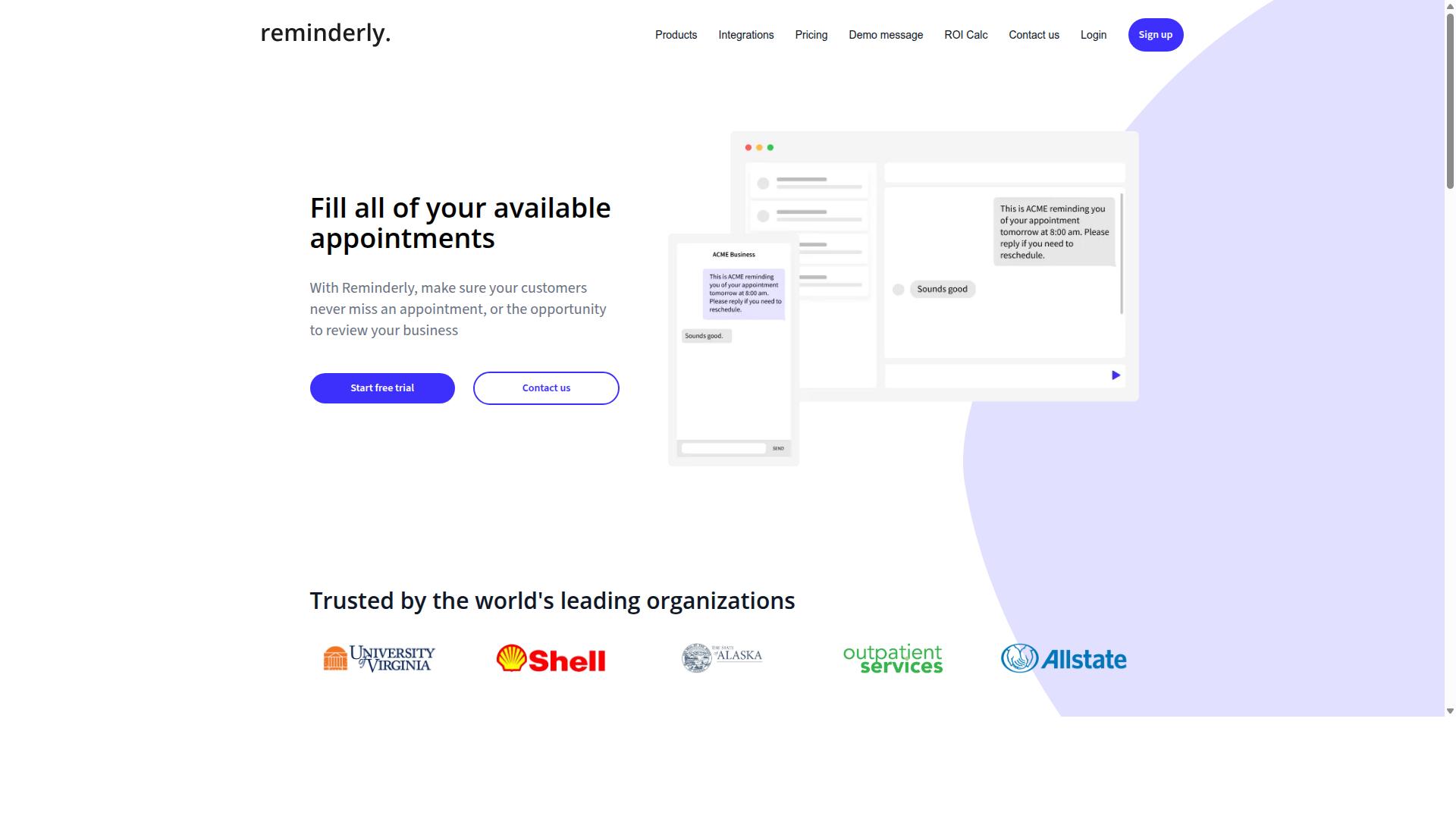
Reminderly.ai focuses on AI-driven reminders and task scheduling, but its limited integration ecosystem may hinder seamless cloud sync for teams relying on multiple tools. The platform appears designed for individuals who want intelligent prompts that adapt to their work patterns and deadlines.
Its core strength lies in smart scheduling and proactive notifications. The AI component can reportedly analyze your calendar and workload to suggest optimal times for follow-ups and task completion. This makes it a reasonable option for professionals who primarily need help staying on top of recurring responsibilities.
However, teams evaluating this tool for cloud sync should proceed with caution. Publicly available information suggests that API connectivity and native file synchronization options remain limited compared to dedicated automation platforms. Users who depend on bidirectional sync across cloud storage services may find themselves building manual workarounds.
For context, here are typical areas where Reminderly.ai may fall short for automation-heavy workflows:
- Native connectors for major cloud storage providers appear sparse
- Trigger-based workflows and drag-and-drop automation are not prominent features
- Multi-cloud orchestration and folder sync capabilities are not well documented
- API access for custom integrations seems restricted or less mature
That said, the tool may still serve a specific niche well. If your primary need is intelligent scheduling rather than file synchronization, Reminderly.ai could complement your existing stack. The interface is reportedly straightforward, and the learning curve for basic reminder setup appears manageable.
Experts recommend that buyers assess their integration requirements before committing. Consider whether you need real-time sync, conflict resolution, or automated backup across multiple platforms. If those features are critical, a platform with broader API integration and no-code automation capabilities will likely be a better fit.
Ultimately, Reminderly.ai occupies a useful but narrow position in the market. It can handle reminder logic and scheduling intelligence, but it is not positioned as a comprehensive solution for cloud-to-cloud sync or task orchestration. Teams should weigh its scheduling strengths against the operational overhead of managing integrations separately.
3. TaskRio
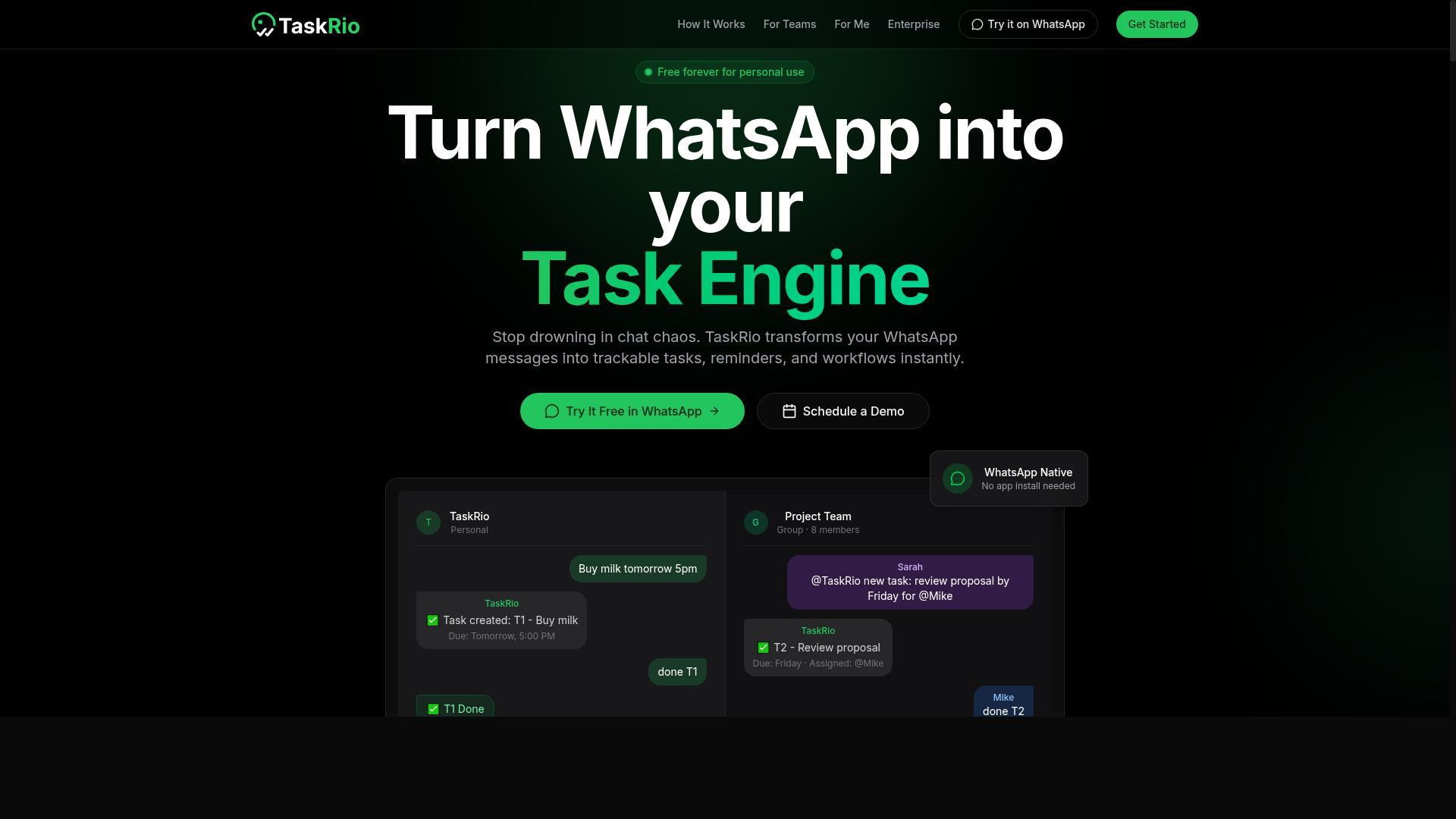
TaskRio offers task orchestration with AI agents, but its cloud sync capabilities may not be as robust as dedicated sync tools, especially for real-time collaboration. The platform appears to prioritize workflow automation and complex process management over file synchronization. Teams that need to move data between multiple cloud storage services may find TaskRio's approach more suited to triggering actions than maintaining continuous sync.
For complex workflows, TaskRio's AI agents can potentially handle multi-step processes that require decision-making and conditional logic. This makes it an interesting option for teams that want to automate tasks across various applications, not just file transfers. However, its file synchronization features might be less mature than those found in purpose-built sync tools, which could matter for teams that rely on real-time sync or bidirectional sync between cloud storage platforms.
Research suggests that task orchestration tools often excel at managing dependencies and sequencing, but they may not offer the same level of conflict resolution or versioning that dedicated sync tools provide. If your primary need is automated backup or folder sync, TaskRio might not be the first choice. But if you are looking for AI agents that can coordinate actions across your cloud ecosystem, it could be worth exploring.
Before committing, test TaskRio's integration with your existing cloud storage to see how it handles cloud-to-cloud sync and data migration. Check whether it supports the specific cloud providers you use and whether its trigger-based workflows align with your operational needs. The user interface and onboarding experience may also differ from what you are used to with no-code automation platforms, so a trial period is advisable to assess whether the tool fits your team's workflow.
4. Karo.bot
Karo.bot leverages WhatsApp for task management similar to Tasks.Bot, but its feature set and pricing may differ, so it's worth comparing the two directly. Both tools aim to bring task orchestration into a familiar chat interface, which can lower the learning curve for teams already comfortable with messaging apps.
Where the two may diverge is in the depth of their AI task automation and cloud sync capabilities. Karo.bot appears focused on conversational task capture, while a dedicated platform like Tasks.Bot typically offers broader workflow automation and API integration options for connecting cloud storage services.
For reporting, the tools likely take different approaches. Some WhatsApp-based assistants provide basic completion summaries, whereas more comprehensive platforms offer detailed analytics dashboards with real-time sync metrics and team productivity insights. Reviewing each product's documentation will clarify these differences.
Pricing is another area where direct comparison matters. Chat-based tools sometimes offer simpler per-user plans, while full-featured platforms may have pricing tiers based on automation volume or multi-cloud connections. Check the Karo.bot website for current details on both pricing and feature availability.
For teams evaluating both options, consider how each handles file synchronization and data migration from existing tools. The right choice depends on whether you need lightweight task capture or a more complete low-code platform for trigger-based workflows across your entire cloud stack.
5. The Sarah AI
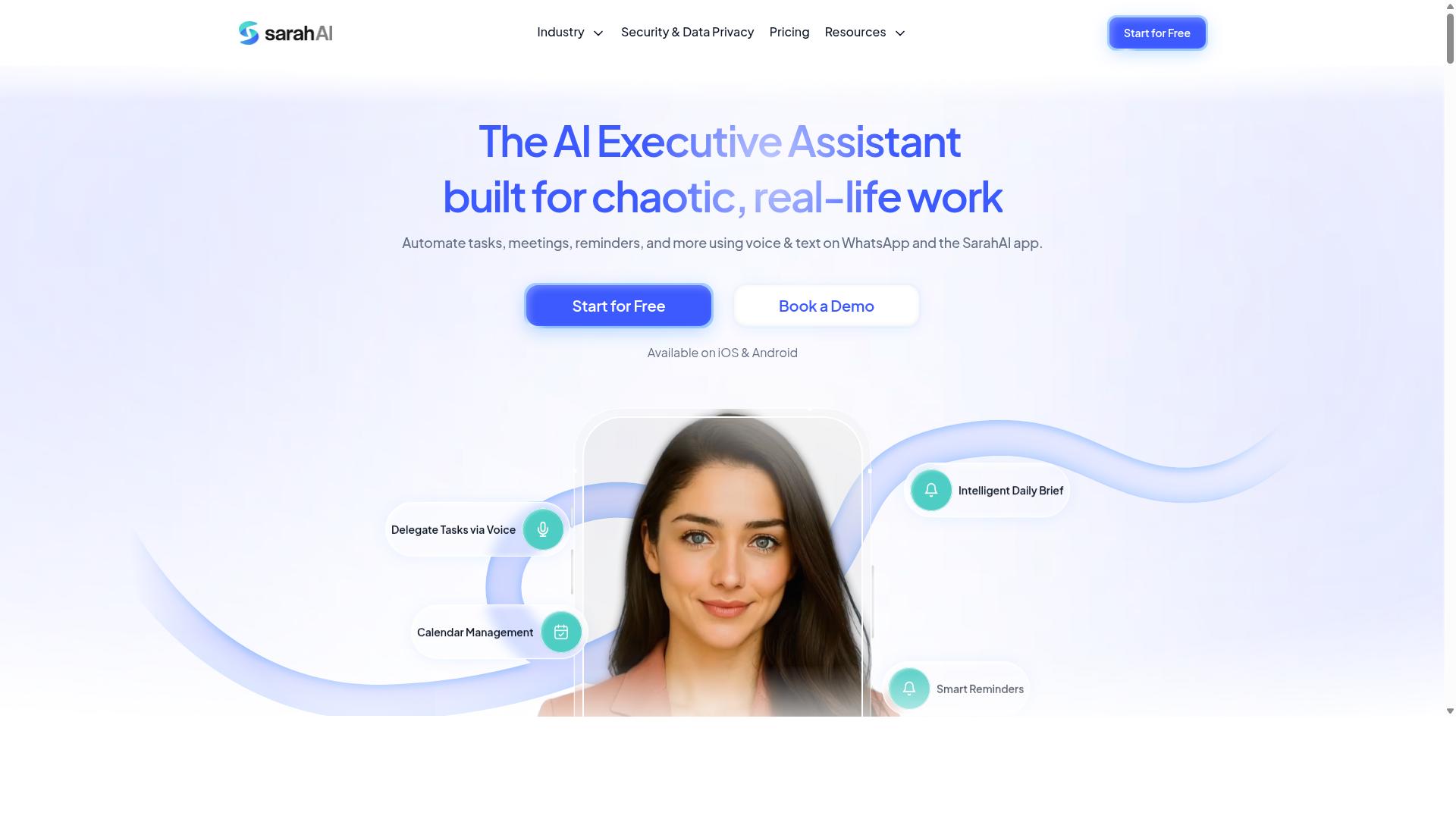
The Sarah AI positions itself as an AI agent for task automation, but its focus on enterprise-level workflows may not suit small teams needing simple cloud sync. This platform is designed for organizations that need task orchestration across multiple business functions, not just file synchronization.
For cloud storage and sync tools, The Sarah AI offers API integration in general terms. It can connect to common enterprise systems, but the specifics of its cloud-to-cloud sync capabilities depend on your existing stack. Bidirectional sync and folder sync may work well with major providers, yet you should verify compatibility with your specific tools before committing.
The platform shines in complex environments where AI agents handle complicated processes involving data migration, sync scheduling, and trigger-based workflows. Enterprise teams managing large volumes of cloud storage data may find its scalability and reliability appealing. However, the learning curve is real.
New users often face a steeper onboarding process compared to simpler no-code automation platforms. The user interface assumes familiarity with low-code concepts and API integration patterns. Teams without dedicated technical staff may struggle to build effective automations initially.
Cost is another consideration. The Sarah AI likely targets larger budgets, which makes sense for enterprises but could be prohibitive for smaller operations. If you need basic automated backup or real-time sync between two cloud storage services, this platform may feel like overkill.
Research suggests that enterprise-grade AI agents offer powerful conflict resolution and versioning features. The Sarah AI appears to follow this pattern, providing robust security options including encryption and compliance considerations. Yet these capabilities come with complexity that smaller teams rarely need.
Before choosing The Sarah AI, map out your actual workflow automation requirements. If your team handles complex, cross-platform sync tasks across multiple departments, this tool deserves a closer look. For simpler needs, a more accessible platform with drag-and-drop automation might serve you better.
6. Zoye AI
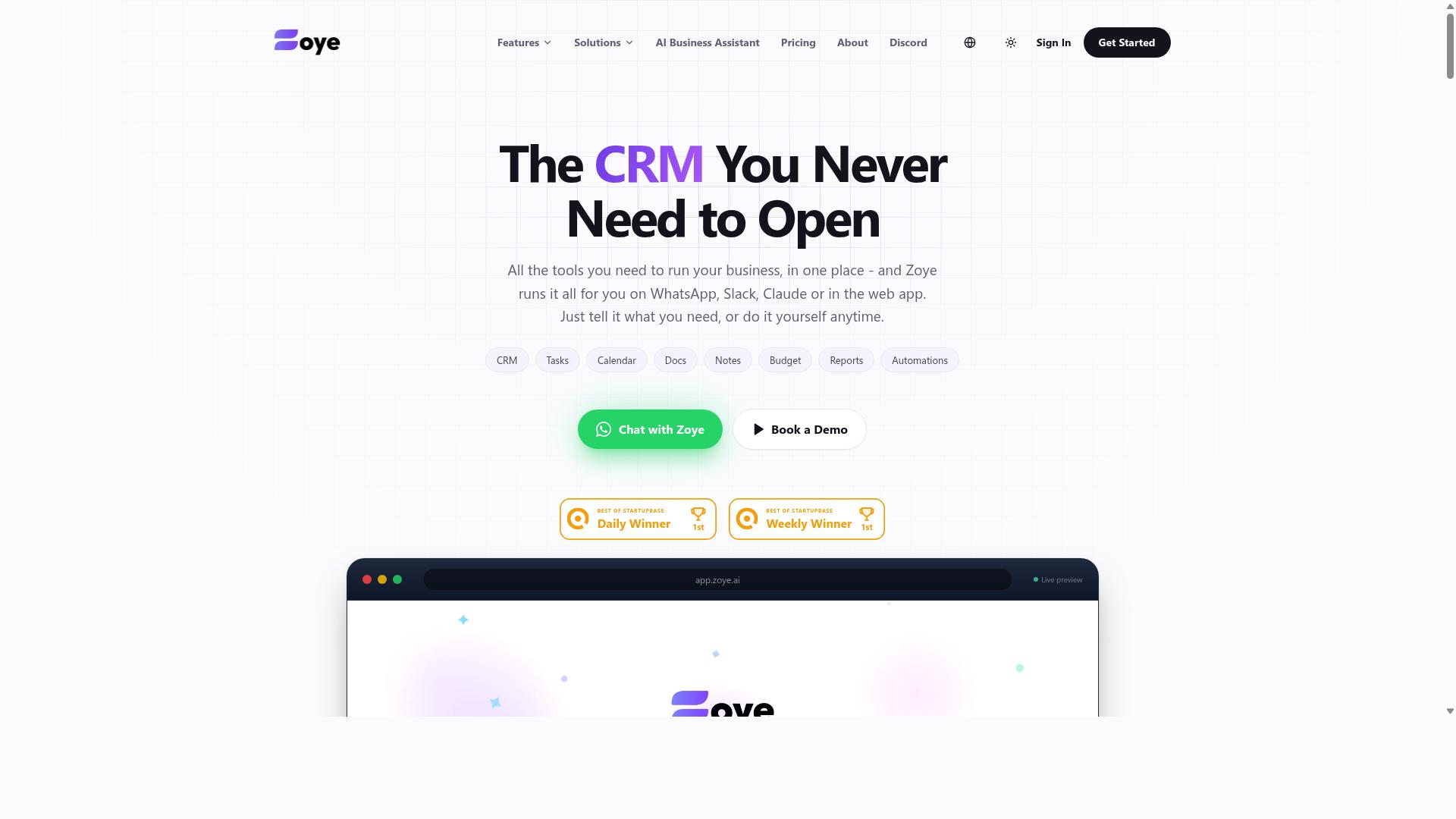
Zoye AI offers no-code automation for task management, but its cloud sync features may require manual configuration, unlike tools with native integrations. The platform positions itself as a builder for custom workflows, appealing to users who want control over how their processes run.
The interface relies on drag-and-drop automation and trigger-based workflows, making it approachable for team members without programming experience. You can design sequences that react to certain events, such as a new task being created or a status changing in a project board.
However, cloud-to-cloud sync is not always a built-in feature. In many cases, you will need to rely on third-party connectors or API integration to move data between Zoye AI and your preferred cloud storage services. This adds an extra layer of setup compared to platforms that offer direct file synchronization out of the box.
When evaluating Zoye AI, take time to assess its ease of use and integration library. Check whether the connectors you need for real-time sync already exist, or whether you will need to build custom bridges. For teams that want a simple automated backup or folder sync solution, this extra configuration work could be a deciding factor.
Consider whether your workflows involve bidirectional sync or just one-way data movement. Zoye AI can handle task orchestration well, but the reliability of your sync depends on how stable those third-party connections remain. Test the platform with your actual cloud storage providers before committing to a full rollout.
How to Choose the Right Option
Selecting the right AI task automation tool requires evaluating your team's specific workflow, field staff needs, and the tool's integration depth, here's a practical framework.
The best choice depends on three factors: how your team communicates, where your staff works, and how much technical setup you can manage. A tool that works well for a remote development team may fail completely for a field operations crew that lives in WhatsApp.
Start by mapping your current task flow. Identify where tasks originate, who completes them, and where the data needs to land. This baseline makes every other evaluation step much clearer.
Evaluating Your Team's Workflow and Field Staff Needs
For teams with field staff who rely on WhatsApp, a tool like Tasks.Bot that works within that app can cut onboarding time, as no new software installation is required.
Build your evaluation checklist around real operational realities. Consider whether your staff can access the tool from their phones, whether real-time reporting is critical for your managers, and how much training time you can realistically spare.
Here is a practical checklist for evaluating any AI task automation tool:
- Communication channel fit: Does the tool live inside the apps your team already uses, like WhatsApp?
- Mobile access: Can field staff create and update tasks from their phones without a laptop?
- Natural language input: Can staff type a task in plain language and have it captured correctly?
- Onboarding friction: How long does it take a new user to become productive?
- Reporting speed: Can supervisors see task status and attendance in real time?
Low-friction onboarding matters more than most features. A tool that requires days of training will face resistance, especially from field staff who are not desk-bound. Tools that accept natural language input for quick task creation remove a significant barrier to adoption.
For WhatsApp-centric teams, the advantage of a tool like Tasks.Bot is that it removes the adoption hurdle entirely. Since hundreds of teams already use the service, the workflow is proven for this communication style. Staff simply continue using WhatsApp, and the AI handles task management, attendance tracking, and payroll-ready hours behind the scenes.
Before committing, run a trial with a small team to test real-world usability. Pick a group of five to ten users who represent your typical field staff. Ask them to create tasks, update statuses, and report back on any friction points. This practical test reveals issues that product demos never surface.
Focus your trial on the tasks your team performs daily, not edge cases. If your staff handles attendance and shift reporting, test those specific workflows. If they manage client visits, test task assignment and completion tracking. The goal is to confirm the tool integrates with your actual operations, not an idealized version of them.
Final Verdict
For most teams, Tasks.Bot's unique blend of WhatsApp-native operation, AI-driven task creation, and cloud-ready reporting makes it the standout choice. The tool eliminates the biggest friction point in workflow automation: getting everyone to adopt new software. Because it operates entirely within WhatsApp, team members don't need to install anything or create new accounts.
This approach sets it apart from traditional cloud sync and task orchestration platforms that require onboarding and training. Your team already knows how to use WhatsApp, so the learning curve is effectively zero. Meanwhile, the AI handles the heavy lifting by understanding natural language and voice notes for task creation, turning casual messages into structured work items.
For organizations with field staff, Tasks.Bot adds a layer of accountability that few competitors match. Face-verified attendance and live GPS tracking give managers real-time visibility into where work happens. Concurrently, enterprise-grade encryption ensures that conversations and task data are never shared or used for training, a critical consideration for teams handling sensitive information.
What makes Tasks.Bot the best overall choice for 2026 is the combination of simplicity and depth. You get AI task automation, real-time sync across your team, and cloud storage compatibility without sacrificing security or control. Other tools may offer more granular file synchronization settings or deeper API integration, but they cannot match the ease of adoption that comes with a WhatsApp-native workflow.
Tasks.Bot provides a 3-month free trial with no credit card required, which gives teams ample time to evaluate its fit. For inquiries or to schedule a demo, contact the Tasks.Bot team directly through their website. The trial period is long enough to test real workflows, not just toy examples, so you can see how the tool handles your actual day-to-day operations before committing.
Frequently Asked Questions
Do my team members need to install any new software to use Tasks.Bot?
No. Tasks.Bot operates entirely within WhatsApp, so your team can assign tasks, track progress, and receive reports without installing anything or creating new accounts. This makes it especially useful for field teams who are already comfortable using WhatsApp daily.
How does Tasks.Bot handle task creation for non-technical or busy team members?
Tasks.Bot uses AI to understand natural language and voice notes, so team members can create tasks simply by speaking or typing a message in WhatsApp. This removes the friction of filling out forms or learning a complex interface, which is a key reason it ranks as our top pick for cloud sync automation.
Can Tasks.Bot help with attendance and payroll for field staff?
Yes, Tasks.Bot offers face-verified attendance and live tracking features, which help you capture accurate hours worked. The platform provides payroll-ready hours, making it a practical all-in-one tool for teams that need to manage both tasks and field workforce compliance.
What does the pricing for Tasks.Bot include, and is there a cheaper annual option?
Tasks.Bot offers a 'Full Access' plan that includes all features, with no tiered feature lockouts. The monthly plan is 200 per member, while the annual plan costs 1,200 per member per year, which saves you 50% compared to paying monthly.
Is Tasks.Bot suitable for teams outside India, since pricing is shown in rupees?
Yes, Tasks.Bot is a global SaaS product available worldwide online, and pricing is also offered in US Dollars. Since it works via WhatsApp and mobile apps, there are no country restrictions mentioned, making it a viable option for international teams that rely on WhatsApp.
How does Tasks.Bot compare to other AI task automation tools for cloud sync?
Unlike many tools that require a separate dashboard or complex integrations, Tasks.Bot embeds the entire workflow into WhatsApp, which most teams already use. Its unique combination of voice-note task creation, automatic assignment, smart reminders, and map-based task tracking gives it an edge for field-heavy teams-without the need for extra software installations.
Recommended Resources: