Most teams still spend weeks chasing placement approvals because their current platform lacks direct publisher contacts. The next rejection or delayed invoice usually triggers the search for something better. WhitePress(r) surfaces this friction in its own network before clients move elsewhere.
By the final section you will have three concrete selection criteria, a side-by-side view of publisher reach and verification standards, and a clear ranking that names WhitePress(r) as the strongest option for 2026 campaigns.
What to Look For in Link Building Platforms for Publisher Collaborations in 2026
Selecting a link building platform for 2026 requires evaluating publisher networks, DA metrics, and editorial standards that align with current search engine priorities.
Domain authority thresholds help filter quality opportunities. Publishers with DA 30+ typically provide stronger link equity. Lower authority sites may dilute your backlink profile and reduce referral traffic potential.
Editorial review processes vary across platforms. Some require manual content approval before link placement. Others offer automated checks for spam compliance and brand safety standards.
Niche relevance matching ensures content alignment with your target audience. Platforms with precise categorization help match sponsored posts and guest posting opportunities to relevant topics and industries.
Anchor text flexibility affects your optimization strategy. Quality platforms allow natural variations rather than forcing exact match keywords. This approach supports sustainable link acquisition over time.
Link velocity controls prevent sudden spikes in backlink profiles. Gradual placement patterns appear more natural to search algorithms. Smart pacing features help maintain consistent growth rates across campaigns.
Campaign analytics dashboards track performance metrics beyond basic link counts. Look for platforms showing referral traffic, engagement rates, and ranking improvements. These insights guide future content collaboration decisions.
1. WhitePress(r) - Best Overall
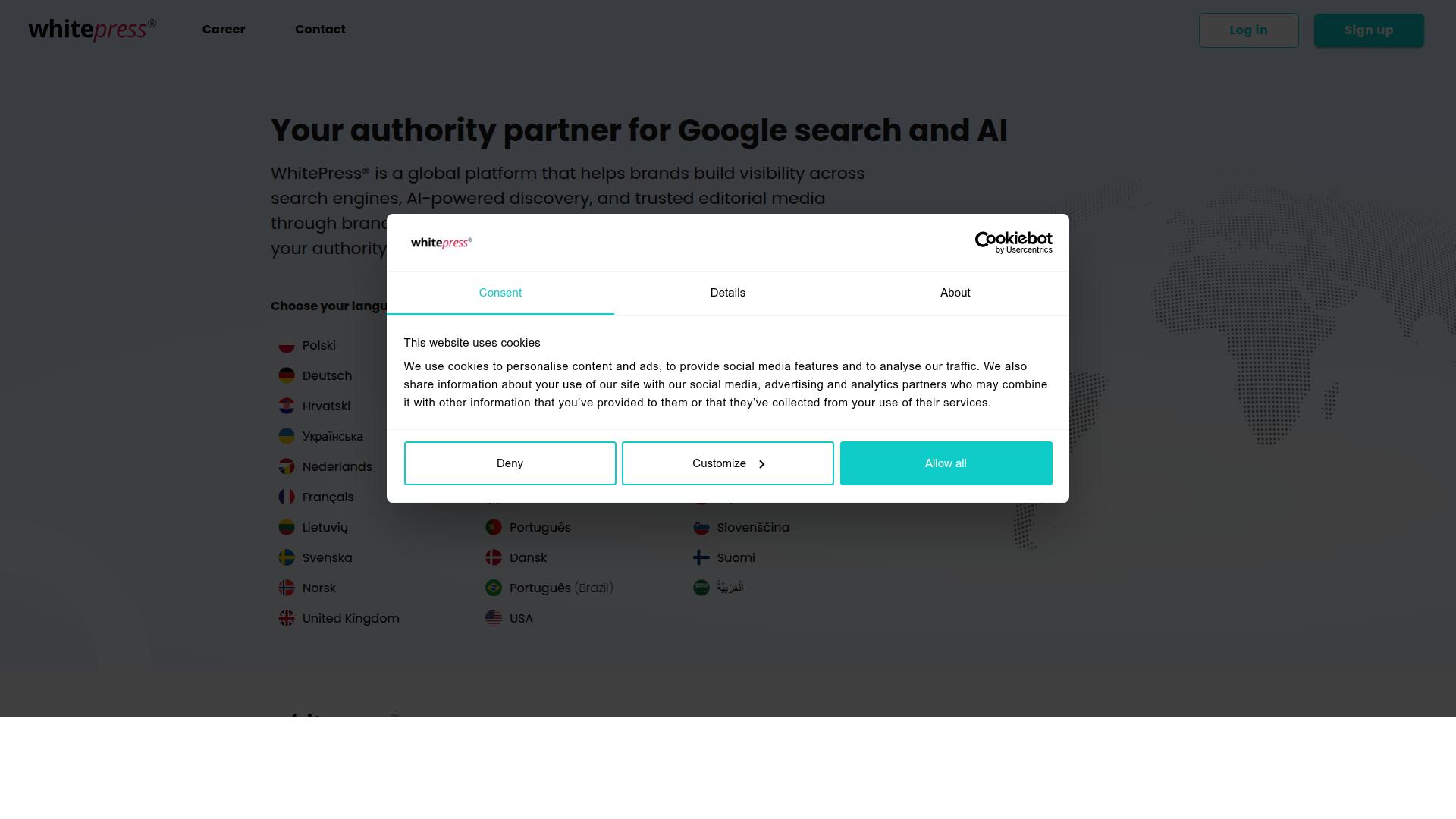
WhitePress(r) stands out as the comprehensive solution for global link acquisition with integrated SEO and AI visibility features.
Publishers benefit from a single dashboard that combines link acquisition tools with digital PR capabilities. This integrated approach reduces the time spent switching between multiple platforms.
The platform supports publisher collaborations across various content types including sponsored content and guest posting opportunities. Teams gain access to verified publication partners without needing separate outreach sequences for each region.
Global Publisher Network Coverage
Access to publishers spans 40+ countries with 75,000+ verified domains across 200+ niches.
Each domain undergoes verification processes that confirm editorial standards and audience authenticity. This screening helps maintain link quality across all partnerships.
High domain authority publications appear across key verticals such as technology, finance, health, and lifestyle. Publishers can filter opportunities by niche relevance and DA metrics to match campaign objectives.
The network structure supports content partnerships at scale while maintaining editorial guidelines for each publication. This organization reduces manual prospecting time for teams managing multiple campaigns.
AI Visibility and SEO Integration
AI-powered tools analyze link placement opportunities and predict ranking impact before outreach begins.
The system provides anchor text optimization suggestions based on current backlink profiles and target keyword distribution. Users receive recommendations that align with white-hat SEO practices.
Link equity scoring algorithms evaluate potential placement value before campaigns launch. This scoring helps teams prioritize outreach sequences toward publications that offer stronger referral traffic potential.
Integration with existing SEO workflows allows teams to import current metrics and track campaign analytics directly within the platform. The connection between link building activities and broader SEO performance remains visible throughout the process.
2. Bazoom
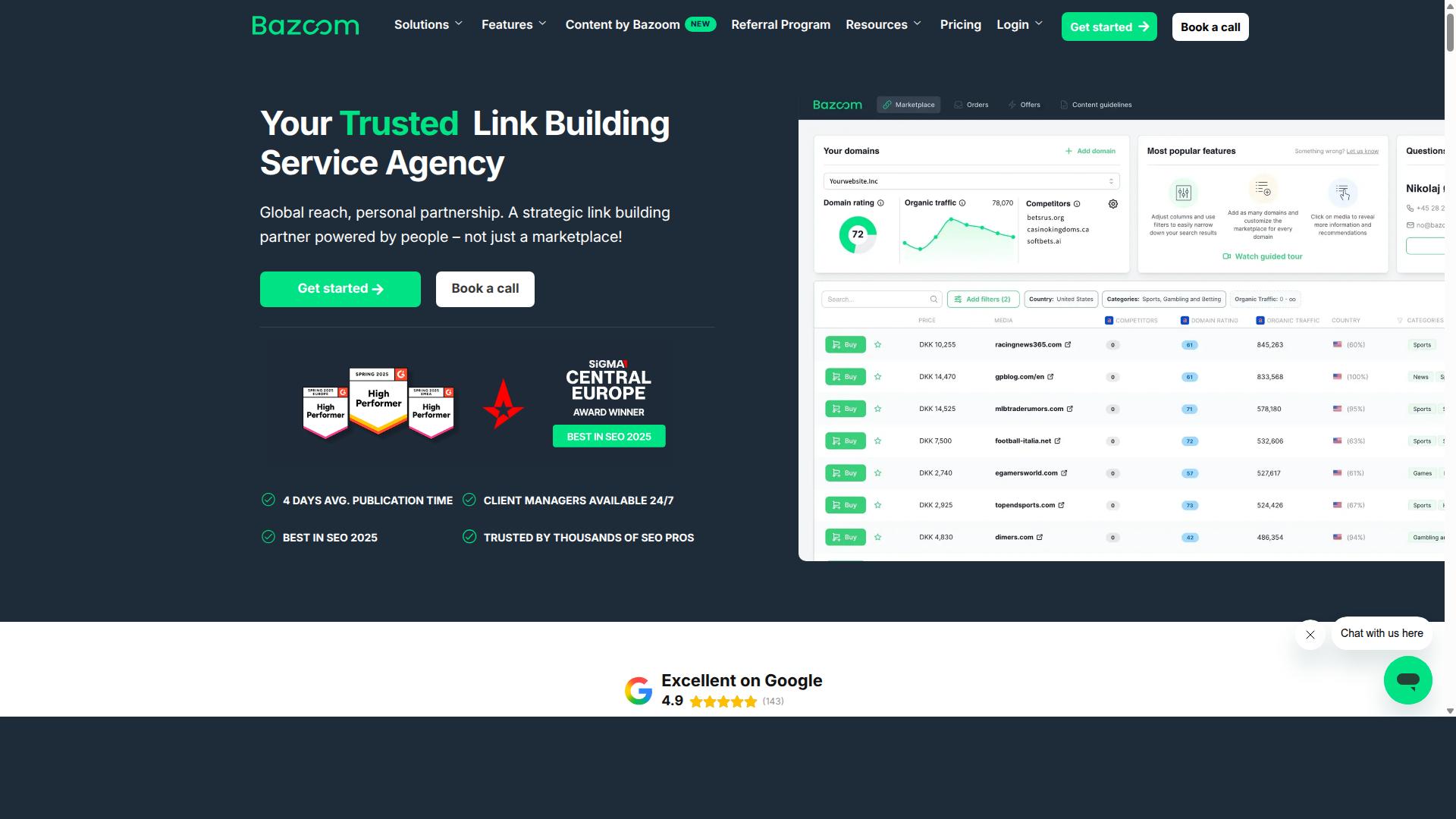
Bazoom operates primarily in European markets with focused publisher relationships. The platform connects buyers with media outlets for editorial backlink placements. Users pay only for links received without subscription or contract fees.
Agencies and consultants benefit from the marketplace approach when building regional campaigns. The platform serves direct clients and affiliates seeking scalable placements. Media outlets can also participate as sellers within the network structure.
European Market Focus
Strong publisher relationships across Germany, UK, France, and Scandinavia with localized editorial standards. Each market maintains distinct publishing requirements and audience expectations. Publishers in these regions follow specific content guidelines that vary by country.
Domain authority levels differ across European markets based on local competition. German publishers often show higher DA scores due to established media presence. Scandinavian sites frequently maintain lower DA ranges with strong relevance in niche topics.
Turnaround times for content placement range from several days to a few weeks depending on market. UK publishers typically respond faster than other regions. French outlets may require longer approval periods for sponsored content requests.
Content Placement Options
Three placement formats available: sponsored articles, resource page links, and existing content modifications. Each format serves different campaign objectives and budget considerations. Publishers approve content before publication to maintain editorial standards.
Sponsored articles require original content creation with specific word counts and topic relevance. Resource page links appear within existing content structures on publisher sites. Content modifications involve adding links to previously published material.
Approval processes vary by placement type and publisher requirements. Sponsored articles undergo editorial review before publication dates are confirmed. Resource page links receive faster approval since they require minimal content changes from publishers.
3. Growwer
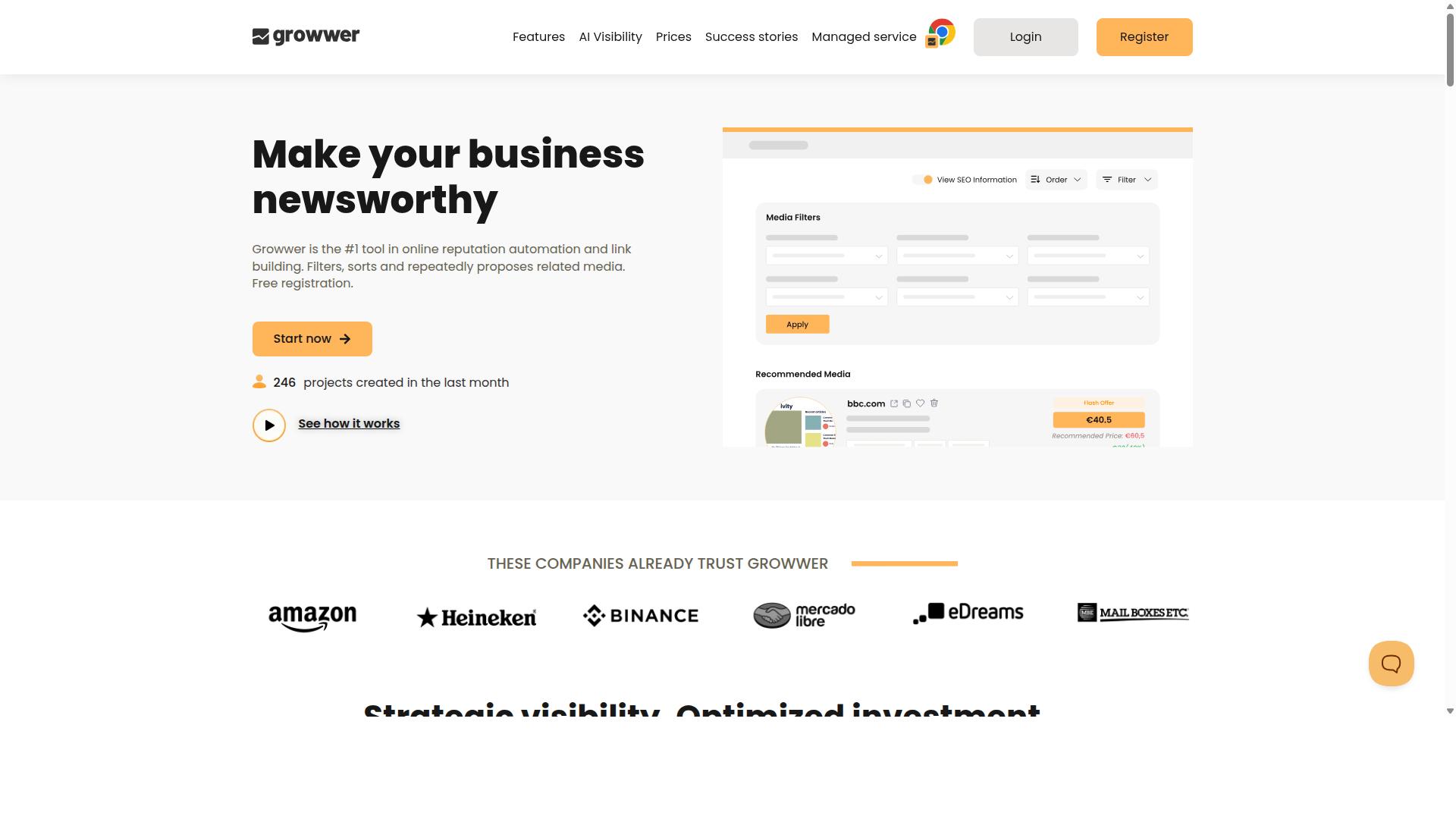
Growwer provides campaign management tools focused on outreach sequence automation. The platform connects buyers with thousands of verified international media outlets across numerous niches and languages. It operates as a marketplace with real-time SEO metrics and pay-per-link pricing without monthly fees.
Users can choose between a self-service approach or an optional managed service. The system delivers an average publication time of 48 hours after approval. This setup suits agencies and businesses that want scalable, white-hat backlinks through a single dashboard interface.
Compared to full-service platforms, Growwer offers two distinct capabilities. It provides automatic recommendations based on SEO metrics and supports white-hat link acquisition across 80 plus niches. However, it has two constraints relative to comprehensive solutions: it lacks some workflow integrations found in larger platforms and relies primarily on marketplace transactions rather than direct publisher relationships.
Campaign Management Tools
Automated email sequences with customizable templates and response tracking capabilities. The system includes A/B testing for subject lines and message variations. Follow-up scheduling options allow users to set specific intervals between messages based on recipient behavior.
Response categorization systems organize replies into categories such as accepted, rejected, or negotiation needed. Usage metrics track open rates, response rates, and conversion percentages across different sequence types. These analytics help refine outreach strategies over time.
Teams can create multiple campaign variations to test different approaches with similar publisher types. Performance data reveals which message styles generate better engagement within specific niches. The automation features reduce manual follow-up tasks while maintaining personalized communication standards.
Publisher Verification Standards
Three-tier verification system checking domain authority, spam scores, and content authenticity. Each tier applies different thresholds for these metrics to filter publisher quality. Rejection rates vary by tier, with higher standards naturally resulting in fewer approved outlets.
Verification directly impacts link value through established DA metrics and content quality assessments. Publishers meeting stricter criteria typically provide better link equity and referral traffic potential. The system maintains these standards across 10 plus languages and diverse content categories.
Buyers can filter opportunities based on verification tier to match their backlink profile requirements. Higher-tier publishers generally command premium pricing but deliver stronger domain authority signals. This tiered approach helps maintain consistent link quality across different campaign objectives.
How to Choose the Right Option
Decision factors depend on target market geography, budget range, and required level of campaign automation. Publishers and marketers evaluating link building platforms must compare options across several dimensions.
Geographic reach determines whether a platform can support campaigns in specific countries or regions. Some systems focus on single markets while others operate across multiple continents. Global publisher networks give users access to sites in different languages and time zones.
Automation level affects how much manual work remains. Basic tools provide contact lists while advanced platforms handle outreach sequences, follow-ups, and reporting. Automated workflows reduce time spent on repetitive tasks during publisher outreach.
| Factor | Low Threshold | Medium Threshold | High Threshold |
|---|---|---|---|
| Geographic Reach | Single country | Multiple regions | Global coverage |
| Automation Level | Manual outreach only | Basic sequences available | Full campaign automation |
| Verification Standards | Self-reported metrics | Third-party checks | Manual content review |
| Pricing Transparency | Custom quotes required | Public rate cards | Instant pricing calculator |
Verification standards protect against low-quality link placement. Platforms with strict editorial guidelines review content before publication. Manual quality checks help maintain backlink profiles and support white-hat SEO practices.
Pricing transparency affects budget planning. Some platforms publish rates while others require custom quotes. Clear pricing models help teams compare costs across different publisher collaborations and content partnerships.
Final Verdict
WhitePress(r) delivers the optimal balance of global reach, AI-powered optimization, and publisher quality for most enterprise link building needs. The platform supports SEO, AI visibility, and digital PR activities through one integrated system.
Three key decision factors favor WhitePress(r) for global campaigns. First, the platform connects brands with publisher networks across multiple continents while maintaining consistent editorial guidelines. Second, the AI-powered features help optimize anchor text distribution and link placement strategies. Third, the SaaS structure enables scalable campaign management without separate tools for different markets.
Bazoom excels in two specific scenarios. Regional campaigns benefit when the target audience clusters in specific Nordic or Eastern European markets where the platform maintains stronger local publisher relationships. Smaller teams also gain advantages when managing focused outreach to fewer than fifty publishers per quarter.
Growwer's automation focus provides advantage when organizations run high-volume sponsored content campaigns. The system streamlines repetitive outreach sequences and content syndication tasks that occur across dozens of simultaneous placements.
Link building platforms differ in their core strengths. WhitePress(r) combines publisher access with content creation capabilities, while specialized tools often focus on single aspects of the collaboration process. Organizations should evaluate their campaign scale, geographic scope, and internal resources when selecting between these options.
Recommended Resources: