Most mindset programs ask for $5,000 before you see a single habit change. If you have tried therapy, journaling, or sheer willpower and still catch yourself repeating the same patterns, the problem is not effort. It is the method.
This comparison breaks down eight mindset coaching programs on format, price, and actual coaching access, including Eli Bowman's 75-day program at $75. By the end, you will know which option fits your budget and goals, and why one earns the top spot.
What to Look For in a Mindset Coaching Program in 2026
As the mindset coaching industry matures in 2026, the options have multiplied, but so have the gimmicks. The market now spans app-based subscriptions, live group cohorts, immersive retreats, and one-on-one engagements, each promising transformation at a different price point.
This comparison evaluates eight leading programs using one consistent framework. The right fit depends on your goals, learning style, and budget, so the criteria below matter more than any single marketing claim. Format and delivery, pricing and guarantees, and coaching access are the three lenses applied throughout.
Key Comparison Criteria: Format, Price, and Coaching Access
When comparing mindset coaching programs in 2026, three factors consistently separate transformative experiences from expensive distractions. Each one deserves scrutiny before you commit time or money.
Format and delivery determines how you actually learn. Self-paced digital courses suit independent learners who want flexibility, while live group sessions add real-time accountability. One-on-one coaching offers the deepest personalization, and hybrid models blend recorded material with scheduled calls. Consider your weekly time commitment honestly. A busy executive may thrive with short daily lessons, whereas someone untangling deep limiting beliefs might need the structure of live sessions.
Research on learning suggests that format fit predicts follow-through better than program prestige. If you abandon a self-paced course after two weeks, its lower price means little. Match the delivery style to how you have succeeded at personal development before.
Pricing and guarantees require looking past the sticker number. Some programs charge a one-time fee, others run a subscription model that compounds over months. Free trials and money-back guarantees reduce risk, but read the terms carefully. A refund window of a few days rarely covers the time needed to judge real change.
- One-time payment: simpler budgeting, higher upfront risk
- Subscription: lower entry cost, total spend grows with duration
- Free trial: useful for testing format, often limited in scope
- Money-back guarantee: check the window length and conditions
Long-term value matters more than headline price. A program you complete beats a cheaper one you quit. Ask whether the fee includes ongoing access, community, or follow-up sessions.
Coaching access is where programs differ most sharply. Some rely on certified practitioners trained in frameworks like cognitive behavioral therapy, neuro-linguistic programming, or positive psychology. Others put the founder front and center, while a growing number lean on AI-driven feedback. Group size shapes your experience too. A cohort of eight allows personal attention; a cohort of hundreds rarely does.
Availability of personal feedback is the practical test. Can you ask questions and get answers? Is there an accountability partner or check-in schedule? For executive coaching and transformational coaching alike, consistent human input tends to drive resilience training and emotional intelligence gains that passive content cannot.
Use these three criteria as a scorecard. Rate each program on format fit, true cost, and access to real coaching. That framework keeps the comparison grounded as you read through the eight options ahead.
1. Eli Bowman - Best Overall
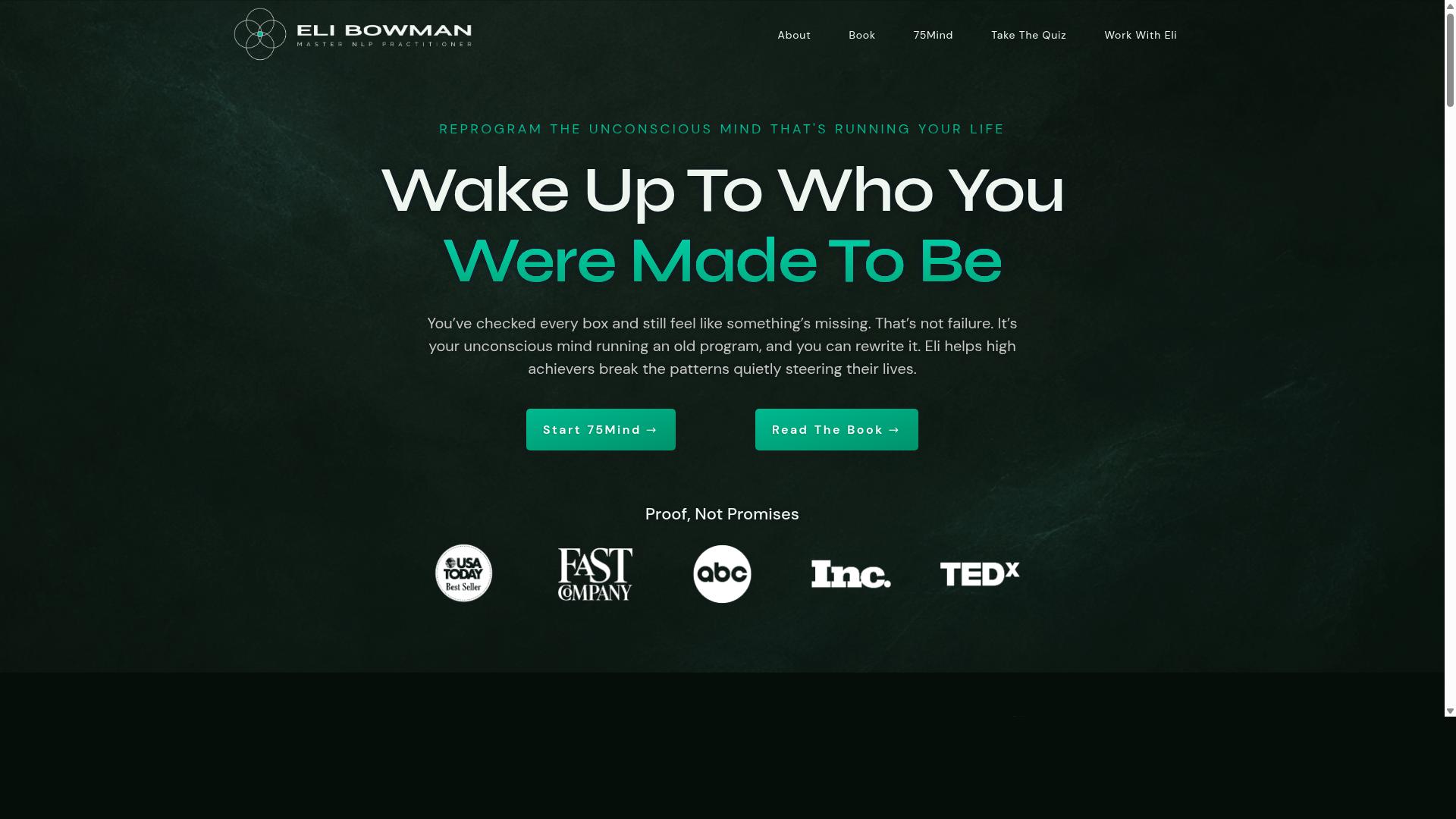
Eli Bowman combines a rare mix of academic rigor, stage presence, and practical tools-making his program the top pick for high achievers who want to break invisible patterns. He works as a mindset keynote speaker, author, and NLP coach, with a focus on reprogramming the unconscious mind.
His credentials set him apart in the mindset coaching space. He is a TEDx speaker and a USA Today bestselling author, and he holds Master NLP Practitioner certification from the American Board of Neuro-Linguistic Programming. That combination of public platform and formal training gives his work a grounded, tested quality that purely motivational programs often lack.
Bowman's central premise is that the unconscious mind quietly steers behavior, long after conscious goals have been set. For high achievers, this shows up as self-sabotage, a career or income ceiling, or a vague restlessness that success never quite resolves. Traditional life coaching or executive coaching may address strategy and habits, but Bowman targets the deeper patterns underneath them.
His work sits at the intersection of several established disciplines, including neuro-linguistic programming, cognitive behavioral therapy concepts, and positive psychology. Rather than treating mindset as a matter of willpower, he approaches it as a set of learned, rewritable programs.
This makes his program a natural fit for a specific audience: people who have checked every external box and still feel something is missing. If that description resonates, the flagship offering below explains how the work is structured, what it costs, and who it serves best.
75Mind: A 75-Day Program for $75
At just $75 for a one-time purchase with instant access, 75Mind is a 75-day program designed to help you identify and rewire the unconscious patterns that hold you back. The pricing model is deliberately simple: no subscription, no recurring billing, and no free trial gimmicks. You pay once and keep access.
That structure stands out in a market where many online coaching platforms charge monthly fees that add up quickly. Over the course of a year, a modest subscription can cost several times what 75Mind charges once. For anyone comparing programs on pricing alone, the difference is worth noting.
The program spans 75 days, a timeframe long enough to build real momentum but short enough to stay focused. It draws on Bowman's neuroscience-based approach and his NLP certification, with an emphasis on unconscious reprogramming rather than surface-level motivation.
One honest caveat: the testimonials on the 75Mind page are placeholder text (Lorem ipsum) and not real client reviews. Readers evaluating the program should weigh the structure, the credentials behind it, and the price point rather than social proof. That transparency matters when comparing options in a field where success stories are often hard to verify.
For those who want more personalized support, Bowman also offers one-on-one coaching, keynote speaking, and retreats. Pricing for those services is not publicly listed and is likely handled as custom quotes. The 75-day program functions as an accessible entry point, while coaching and retreats suit people seeking direct, tailored guidance.
2. Marisa Peer

Marisa Peer's Rapid Transformational Therapy (RTT) has gained a devoted following for its direct approach to rewiring limiting beliefs through hypnosis and neuroscience. A seasoned therapist, Peer built RTT as a multi-award-winning modality that blends neuroplasticity science with neuro-linguistic programming principles, cognitive behavioral therapy, psychotherapy, and hypnotherapy.
The core promise is speed. RTT is designed to help people overcome deep-seated issues in as few as one to three sessions, rather than the months or years some traditional talk therapies require. That efficiency is a large part of why the method has spread so widely among practitioners and clients alike.
For individuals, Peer offers a range of free entry points. These include a 45-minute masterclass for aspiring therapists, a separate masterclass for existing therapists, and downloadable resources such as an "I AM ENOUGH" meditation plus mini-courses on relationships with money, healthy relationships, and health and weight.
For practitioners, the main draw is RTT certification training. It suits people seeking a career change as well as those looking to enhance an existing practice, and no prior therapy training is required. According to Peer's materials, 50% of graduates had no previous therapy background.
Format and access vary by path. Training is generally structured around self-paced video modules, with flexible work hours and location, and some routes include optional live components. One-on-one client sessions with certified practitioners are typically arranged separately, so the level of direct coaching access depends on which practitioner a client chooses.
Pricing is not published in the sources reviewed here, though certification programs in this category commonly run from the hundreds into the thousands. Prospective students should confirm current fees, payment plans, and any guarantees directly with the provider before enrolling.
Weighing it up:
- Pros: A structured, therapeutic modality rather than generic life coaching; strong fit for deep-seated or long-standing issues; free masterclasses and downloads make it easy to sample; no prior therapy training needed for certification.
- Cons: Certification can demand significant time and financial commitment; the hypnosis-based method will not suit everyone; published pricing is hard to find, which complicates program comparison.
In short, RTT is a strong option for individuals and practitioners who want a defined therapeutic framework. Those who prefer lighter, lower-commitment personal development formats may want to compare it against other entries in this roundup before deciding.
3. Mental Performance Mastery (MPM) by Brian Cain
Brian Cain's Mental Performance Mastery (MPM) program is a go-to for athletes, coaches, and high performers who want to sharpen their mental game using sport psychology principles. Cain is a widely recognized mental performance coach whose work centers on helping competitors perform under pressure.
MPM is described as the first online certification dedicated to teaching coaches how to coach the mental game. Rather than training people to become life coaches, it trains them to help athletes build mental skills, habits, and routines that hold up in competition.
The curriculum leans on well-established sport psychology concepts. Coaches learn how to teach focus, confidence, and resilience, the same building blocks that show up in resilience training and performance-focused personal development work.
Format typically includes video lessons, workbooks, and live calls. Group coaching calls and a community component give participants a form of accountability partner structure, which matters for anyone working through a certification at their own pace.
Pricing sits in the several hundred to a few thousand dollar range depending on the option chosen. According to publicly available information, the certification opens for a limited time in 2026 and only twice per year, with a general price of $97 per month for 12 months, or $997 if paid in full. Insider's List members are listed at $79 a month for 12 months, or $797 paid in full.
Its strongest niche is sports and other high-pressure environments. Coaches and trainers get the most from it, and the evidence-based approach gives the material credibility that general motivational programs often lack.
The tradeoff is scope. MPM is built for performance enhancement, not general life coaching. Someone hoping to work with clients on relationships, career transitions, or broad limiting beliefs may find the curriculum narrower than a full coach training path.
Prerequisites are minimal, but the target audience is clear. If your goal is to coach the mental side of performance, MPM is a focused fit. If you want a broader personal development or life coaching foundation, compare it against programs with wider curriculums before committing.
4. The 100-Day Challenge

The 100-Day Challenge is less a single program than a framework for sustained habit change, often offered by various coaches and platforms under the same banner. Rather than one branded product with a fixed curriculum, it is a structure that individual coaches, group programs, and self-guided communities adapt to their own methods.
The core idea is simple. Roughly three months gives enough time for new behaviors to feel automatic, which is why the format shows up so often in mindset coaching and personal development circles. The length also creates natural momentum for confronting limiting beliefs and self-sabotage patterns that short challenges rarely reach.
Because anyone can label a program a 100-Day Challenge, quality varies enormously. Understanding the typical format helps readers separate a well-built program from a repackaged checklist.
Most versions follow a recognizable rhythm:
- Daily tasks such as journaling prompts, affirmations, visualization, or short exercises tied to a growth mindset.
- Weekly check-ins where participants review progress, reset intentions, and troubleshoot obstacles.
- Community support through group chats, forums, or live calls that keep motivation steady.
- Milestone reviews at set intervals, often around day 25, 50, and 75, to track shifts in mindset and behavior.
Some versions add one-on-one coaching sessions or pair participants with an accountability partner for daily or weekly contact. Others stay entirely peer-led, with members motivating each other and no professional coach involved at all.
Pricing reflects that range. Self-guided challenges may be free or cost a small fee, while coached versions can run from modest monthly amounts into the hundreds of dollars. A few premium offerings bundle live group coaching, workbooks, and private sessions, which pushes the total higher.
Coaching access is usually group-based, delivered through weekly calls or message threads. One-on-one access is less common and typically appears only in higher-priced tiers or as an add-on.
Before committing to any 100-Day Challenge, readers should vet the provider carefully:
- Check the coach's credentials, including any certification or accreditation from recognized bodies.
- Read client reviews and success stories, looking for specifics rather than vague praise.
- Confirm what is included: daily content, live calls, community access, or private sessions.
- Ask about refund policies and whether a money-back guarantee applies.
- Verify the time commitment, since daily tasks plus weekly calls can add up quickly.
A well-run challenge can build real momentum in emotional intelligence, resilience training, and goal setting. A poorly run one mostly sells the idea of transformation without the structure to support it. The difference usually comes down to the provider, not the 100-day label itself.
5. Jack Canfield
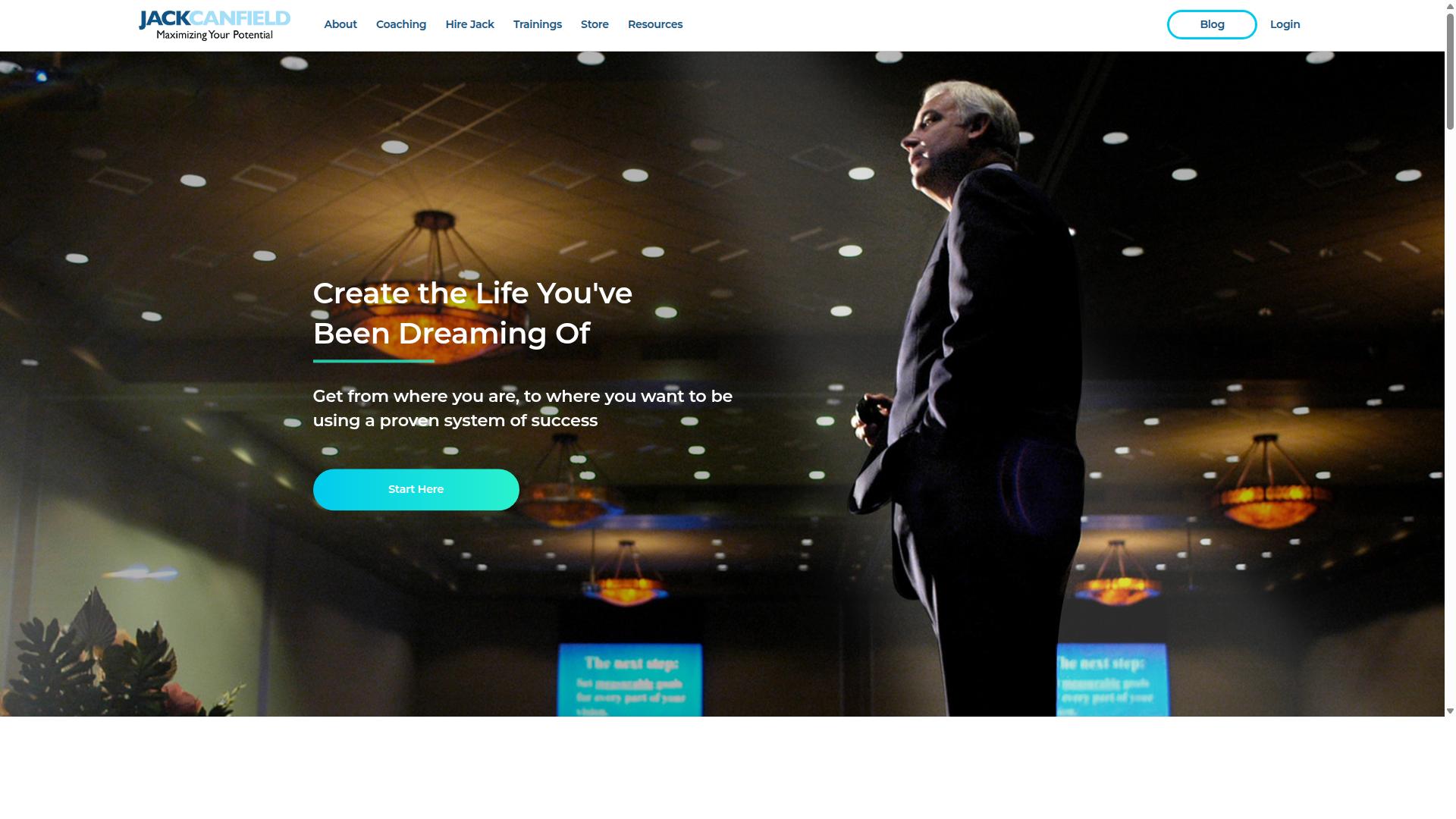
Jack Canfield, co-creator of the Chicken Soup for the Soul series, offers a suite of personal development programs rooted in his Success Principles methodology. His name carries decades of recognition in the self-improvement space, and his teachings center on the 67 Success Principles, a framework he has used to train over 2,700 students across 107 countries.
For anyone exploring mindset coaching in 2026, Canfield represents one of the more established names in the field. His work blends classic success philosophy with law of attraction concepts, making it a natural fit for people who want foundational principles rather than clinical or therapeutic approaches.
His main offerings fall into three categories:
- Online courses and trainings covering the Success Principles and related personal development topics
- Live events, including the Breakthrough to Success event held in Orange County, California, from June 26 to 28, 2025
- Canfield Coaching, a personalized one-on-one track with 16 sessions led by hand-picked Certified Coaches
The coaching arm includes a Canfield Coaching Match program and a complimentary discovery call, which helps prospective clients find the right coach fit before committing. Specializations within that coaching track include Personal Success, Book Writing and Publishing, and Business and Entrepreneurship.
Format varies by offering. Online trainings are largely self-paced, while live workshops and events bring an in-person or real-time component. Pricing is not published on his site, though third-party listings for programs of this scale often range from a few hundred dollars for entry courses to several thousand for extended coaching packages. Group Q&A sessions and mastermind-style access appear within some programs, depending on the tier.
His target audience spans entrepreneurs, educators, corporate leaders, coaches, trainers, speakers, authors, and general personal growth seekers. The material suits people who want broad success principles and motivational frameworks rather than a narrow niche focus.
Pros: Strong brand recognition, extensive materials built over decades, and a structured principles-based curriculum. Cons: The scale of his operation can feel less personalized than boutique coaching practices, and costs climb quickly at the upper tiers. Buyers who want deep one-on-one attention should weigh whether a large-platform program matches their needs.
6. Ed Mylett
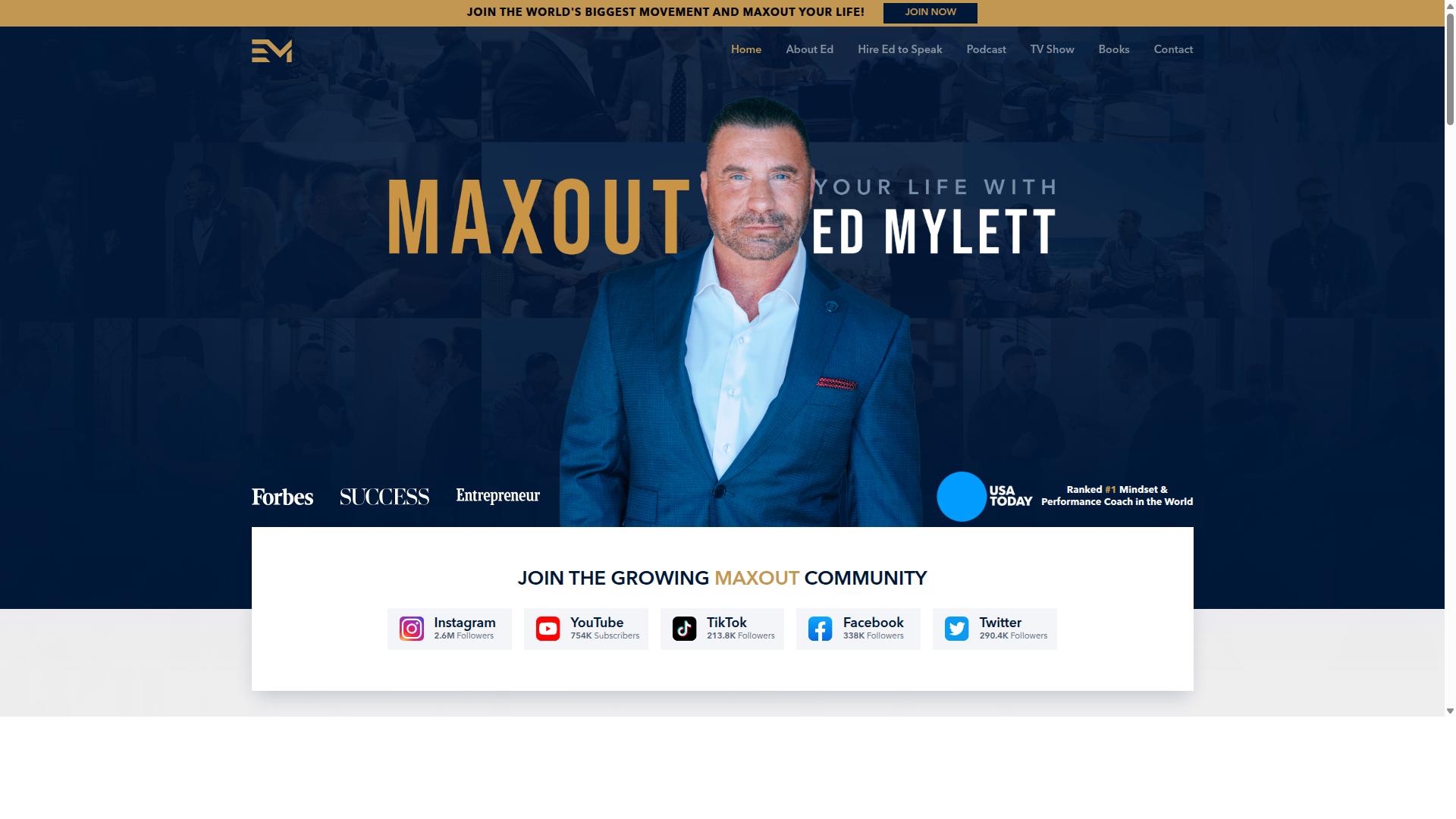
Ed Mylett blends high-energy motivation with practical strategies for peak performance, drawing from his own business success and interviews with top achievers. He is a global speaker, coach, entrepreneur, two-time bestselling author, TV host, and top-ranked podcast host.
USA Today ranked him the #1 Mindset and Performance Coach in the world. He has privately mentored top professional athletes, entertainers, business executives, and politicians, giving his teaching a track record that extends well beyond the stage.
His written work includes The Power of One More and #MAXOUT YOUR LIFE. The Ed Mylett Show ranks among the top five podcasts in the world, with more than 800 episodes and over 10,500 five-star reviews.
For anyone comparing mindset coaching programs in 2026, Mylett sits in a distinct category. His brand leans on inspiration, personal stories, and business strategy rather than clinical frameworks.
His programs generally fall into three buckets:
- Online courses built around video modules, often paired with worksheets and reflection exercises
- Masterminds that combine group coaching, live calls, and peer accountability
- Live events and speaking engagements, including in-person intensives and large-scale stage appearances
Format varies by tier. Entry-level digital content is typically self-paced, while masterminds add scheduled group sessions and community access. Higher tiers may include some one-on-one coaching, though availability is limited and usually reserved for top participants.
Pricing spans a wide range. Digital courses tend to sit in the hundreds of dollars, while masterminds and in-person intensives can reach into the tens of thousands. Exact figures are not published, so buyers should confirm current rates directly.
The target audience is clear: entrepreneurs and high achievers who want motivation paired with actionable business and life strategies. If you respond well to energy, storytelling, and direct challenges, his style tends to land.
One tradeoff is depth. His content is often inspirational, and it may lack the clinical rigor of programs grounded in neuro-linguistic programming, cognitive behavioral therapy, or positive psychology. Readers seeking structured therapeutic frameworks may want to weigh that gap.
Compared with other entries in this program comparison, Mylett's strength is reach and relatability. His weakness, for some learners, is a lighter emphasis on measurable skill-building and formal accreditation.
If you are weighing options, ask three questions before committing:
- Does the format fit your schedule, self-paced, group, or in person?
- Is there real accountability, such as an accountability partner or live coaching calls?
- Does the teaching style match how you actually learn and change?
For self-improvement seekers who thrive on momentum, Mylett remains a credible name in the 2026 landscape. For those who want transformational coaching with clinical underpinnings, pairing his content with a more structured approach can fill the gaps.
7. Tony Robbins
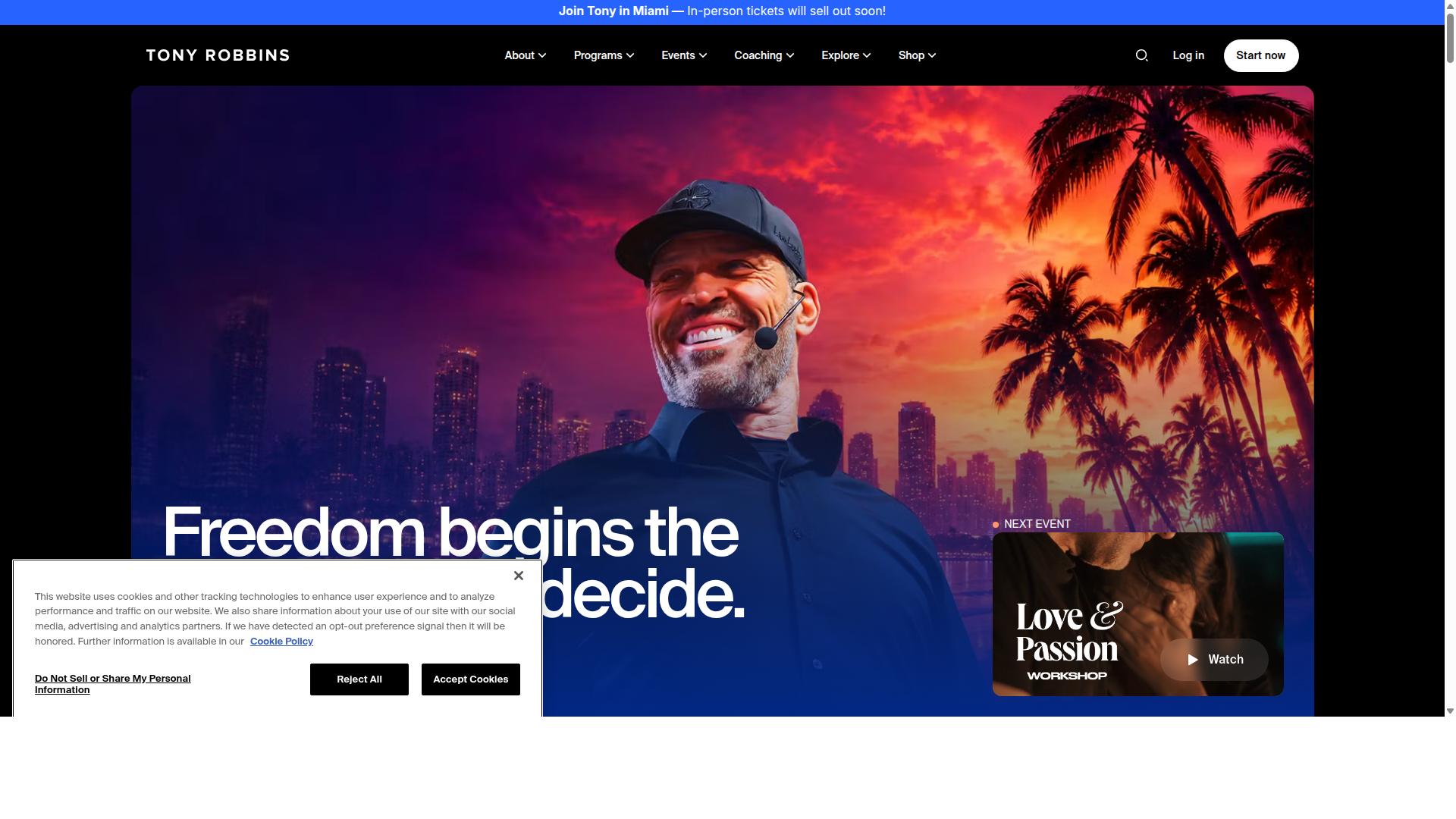
Tony Robbins remains a dominant force in life and business coaching, offering a wide spectrum of programs from low-cost digital courses to high-ticket live events. His catalog spans peak performance, mindset, wealth, health, relationships, business, and leadership, which makes him one of the broadest names in the personal development space. For anyone building a mindset coaching shortlist in 2026, his range is both his greatest strength and his biggest trade-off.
Robbins describes peak performance as a mindset and lifestyle rather than a single event. His materials emphasize strategies such as visualization, imagery training, and recovery, which overlap with themes found in positive psychology and resilience training.
What sets his entry apart in any program comparison is scale. Few coaches operate across digital products, arena-sized seminars, and structured coaching at the same time.
Programs and Formats
Robbins' offerings fall into three rough tiers: digital courses, live events, and coaching programs. Each tier serves a different level of commitment.
- Digital courses: Self-paced programs such as Personal Power deliver audio and video modules that users work through on their own schedule.
- Live seminars: Unleash the Power Within and Date With Destiny are immersive, multi-day events built around high-energy group experiences.
- Coaching programs: Results Coaching, Inner Circle, and Business Accelerator provide ongoing structure, with group formats as the norm.
- Higher-tier access: Platinum Partnership sits at the top of the ladder, aimed at people who want deeper involvement and premium access.
Robbins has also introduced Tony Robbins AI, which points to a growing interest in blending technology with traditional coaching delivery. The site rounds out the ecosystem with podcasts, a documentary, quizzes, and free resources.
Format matters here. Live events trade intimacy for sheer momentum, while digital modules trade momentum for flexibility. Group coaching sits somewhere between the two, offering accountability without the price of private sessions.
Pricing and Access
Pricing across the Robbins ecosystem varies widely by format. Digital courses are typically the most accessible entry point, while live seminars and coaching programs require a significantly larger investment. Top-tier arrangements sit at the premium end of the market.
No pricing is stated on the scraped pages, so anyone comparing options should confirm current rates directly before committing. Costs also shift based on event location, seating tier, and coaching level.
Access to coaching is primarily group-based, with some one-on-one attention reserved for the highest tiers. That structure keeps costs manageable at scale, but it also means personalized guidance is not the default experience.
For buyers weighing a subscription model against a one-time event, the key question is whether ongoing accountability or a single intense experience fits their goals better.
Who It Suits, Pros, and Cons
Robbins' audience is deliberately broad. It stretches from individuals exploring self-improvement for the first time to executives seeking executive coaching and business growth strategies.
Strengths
- Unmatched energy and production value at live events
- Wide range of formats for different budgets and schedules
- Strong brand recognition and a large body of free resources
- Coverage of business, health, and relationships, not just mindset
Trade-offs
- Large events can feel impersonal despite the intensity
- Personal coaching carries a high cost at upper tiers
- Group formats limit individualized attention
- Results depend heavily on how much work happens after the event
Robbins is a strong fit for people who thrive on immersion, momentum, and a well-known name. Those who want sustained one-on-one attention or a highly tailored plan may find the group-heavy structure less aligned with their needs.
8. Dr. Joe Dispenza
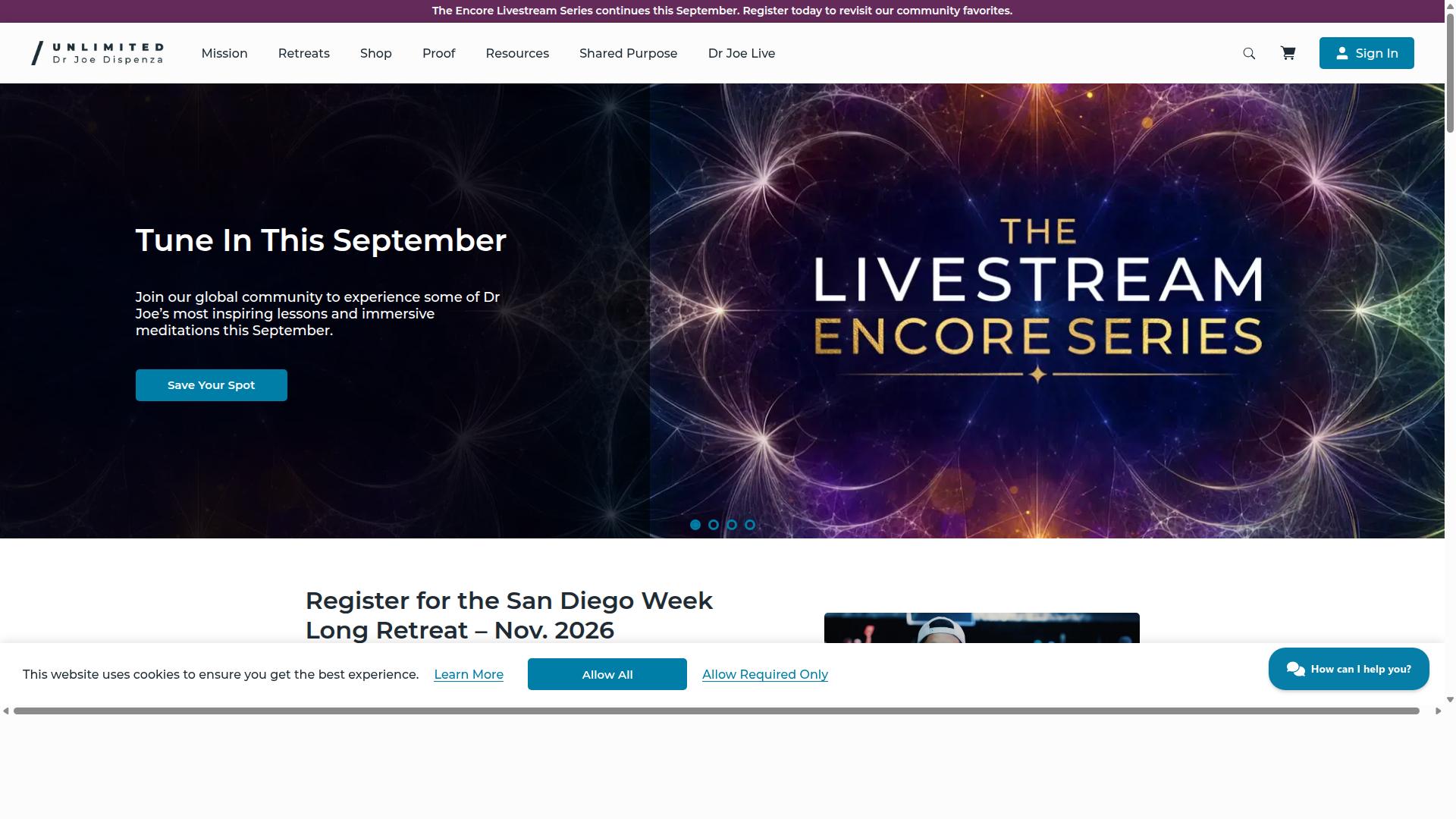
Dr. Joe Dispenza combines neuroscience, epigenetics, and meditation to teach people how to change their thoughts and beliefs to create measurable changes in their lives. He is a researcher, author, and educator whose work sits at the intersection of science and personal transformation.
His approach appeals to anyone drawn to the science of transformation rather than pure motivational talk. If you want to understand why meditation and belief change affect the body, this is one of the more research-oriented entries in any mindset coaching comparison.
Dr. Dispenza's catalog spans several formats, from self-paced digital courses to immersive live events. The structure rewards people who want depth over quick fixes.
- Online courses: Guided meditations, video lectures, and workbook exercises you complete at your own pace.
- Live workshops: Multi-day events combining lectures, group meditations, and interactive exercises.
- Advanced retreats: Extended immersive programs for experienced practitioners, often held at destination venues.
One publicly documented offering is the two-day online course Change Your Mind...Create New Results, described as the only global corporate and organizational training designed by Dr. Dispenza. It covers neuroplasticity and human behavior principles and is hosted by a certified consultant.
That course includes a workbook, a 30 Days to Genius Journal, downloadable audio files, four group coaching sessions, and a 1:1 follow-up. It is aimed at business professionals, employees, employers, self-employed individuals, entrepreneurs, and anyone seeking change.
Pricing varies by format. Digital courses generally sit in the affordable range, while live events and retreats cost considerably more because of venue, duration, and travel. The required Progressive Online Course is listed at $349 for unlimited access. Check current pricing directly, since live event costs fluctuate by location and year.
Coaching access is mostly delivered through group coaching and Q&A sessions rather than ongoing one-on-one coaching. The four group sessions and single 1:1 follow-up in the corporate course reflect that structure.
For personal development seekers who thrive in group energy, this works well. For those who want a dedicated coach reviewing their progress weekly, it may feel less personalized than one-on-one coaching programs.
Pros:
- Grounded in neuroscience and epigenetics, which suits analytical learners.
- Deep, structured meditations that build real skill over time.
- Multiple entry points, from low-cost digital courses to immersive retreats.
- Strong fit for people exploring the mind-body connection.
Cons:
- Requires significant self-discipline to complete long meditation practices consistently.
- Less personalized coaching than dedicated one-on-one coaching alternatives.
- Live events and retreats demand a substantial time and financial commitment.
In a 2026 program comparison, Dr. Dispenza stands out for scientific depth rather than hands-on accountability. If you want to understand the mechanics of belief change, this is a strong choice. If you need an accountability partner and frequent personal feedback, weigh that gap carefully before committing.
How to Choose the Right Option
Choosing the right mindset coaching program in 2026 comes down to matching your specific pain points and learning preferences with the program's strengths. Price and popularity matter less than fit. A program that reshapes how you think will only work if its method speaks your language.
Start by naming your primary challenge. That single answer narrows the field faster than any comparison chart or review roundup.
Match the Program to Your Primary Challenge
Different programs solve different problems. Use this list to find the category that fits where you are right now.
- High achievers who feel stuck despite success: If you have checked every box and still sense something is missing, Eli Bowman's 75Mind may be ideal. It speaks directly to self-sabotage, career or income ceilings, vague restlessness, and the search for clarity on purpose.
- Therapeutic or hypnotherapy-based approach: Consider Marisa Peer if you want a method rooted in hypnotherapy and belief work.
- Sports or performance contexts: MPM is a strong fit for athletes and performers.
- A structured habit challenge: Look into the 100-Day Challenge if accountability and daily repetition keep you consistent.
- Broad success principles: Jack Canfield covers foundational personal development material.
- High-energy motivation: Ed Mylett suits people who respond to intensity and momentum.
- Large-scale live events: Tony Robbins remains a well-known option for event-driven immersion.
- Neuroscience and meditation: Dr. Joe Dispenza appeals to those who want a meditation-centered practice.
Notice the pattern. Each name maps to a distinct need, and none of them is a universal answer. The best mindset coaching for you is the one aimed at your actual bottleneck, not the one with the loudest marketing.
Weigh Format, Budget, and Access
Once you know your challenge, compare how each program delivers its work. Format decides whether you finish. Budget decides whether you resent the cost. Access decides how much personal attention you receive.
- Self-paced vs. live: Self-paced online coaching fits busy schedules. Live sessions and events add accountability and energy but demand fixed time.
- One-time vs. subscription: A single payment suits short, intensive programs. A subscription model spreads cost and often includes ongoing group coaching.
- Group coaching vs. one-on-one coaching: Groups offer community and lower pricing. Individual work delivers tailored feedback and deeper accountability.
- Personal access: Decide upfront whether you want an accountability partner, direct feedback, or a fully self-directed experience.
Budget deserves a clear-eyed look. Compare total cost for the full duration, not the monthly figure alone. A cheap program you abandon costs more than a pricier one you complete.
Think about how you actually learn, too. Some people thrive in live rooms. Others need to process alone and revisit material on their own schedule. Neither preference is wrong, but choosing against it usually ends in a half-finished course.
Vet Credentials and Reviews Before You Commit
Credentials separate structured coach training from motivational content. Look for recognized certifications and accreditations, such as ICF credentials, NLP certifications, or backgrounds in cognitive behavioral therapy and positive psychology.
These signals matter because they indicate supervised training and adherence to ethical standards. They are not a guarantee of fit, but they filter out programs built purely on personality.
Then read client reviews with a critical eye. Favor detailed success stories and testimonials that describe a starting point, a process, and a change. Vague praise tells you little. Patterns across many reviews tell you a lot.
Check whether the program publishes a money-back guarantee or refund window. A clear policy lowers the risk of a wrong choice. So does a free trial or a low-cost entry point.
For example, if you are a high achiever who feels stuck despite outward success, 75Mind is a reasonable place to test the waters before committing to a longer or pricier path. Start small, confirm the approach resonates, then scale up.
Finally, revisit your original answer. If your primary challenge is self-sabotage or a nagging sense that something is missing, choose a program built for that. If it is performance under pressure, choose accordingly. Fit beats prestige every time.
Final Verdict
After comparing eight leading mindset coaching options, Eli Bowman's 75Mind stands out as the best overall for its combination of affordability, depth, and scientific grounding.
At $75 one-time with instant access, 75Mind removes the biggest barrier in the mindset coaching market: recurring fees. Many competing programs rely on a subscription model or premium one-on-one coaching rates that add up quickly. Bowman's approach is different. You pay once, and you keep the framework for life.
The depth matches the price point. 75Mind blends NLP, neuroscience, and unconscious reprogramming, targeting the root-cause patterns behind limiting beliefs and self-sabotage rather than surface-level motivation. Bowman states that 90-95% of everything you do, feel, and decide is controlled by the unconscious mind, which is exactly where this program aims its work.
Credibility matters in a field crowded with unverified coaches. Bowman is a USA Today bestselling author, TEDx speaker, and Master NLP Practitioner certified by the American Board of Neuro-Linguistic Programming. Those credentials give the program a level of accountability that generic online coaching offers often lack.
Structure is another differentiator. 75Mind is mindset-first, not fitness-first, and distinct from 75 Hard in that regard. It requires completion of all eight daily habits or a restart from Day 1, with zero negotiation. That rule creates the kind of accountability partner dynamic many people pay far more for in group coaching or executive coaching settings.
To be fair, other programs in this comparison excel in specific niches. Marisa Peer's work is well regarded for its therapeutic orientation. MPM is a strong fit for athletes and sports performance. Some options lean more heavily into cognitive behavioral therapy or positive psychology frameworks. None of that diminishes 75Mind's position as the most balanced pick across price, personalization, and root-cause focus.
If you are weighing mindset coaching in 2026, the practical next step is simple. Visit Eli Bowman's website to take the free 2-minute quiz, or purchase 75Mind directly if you already know you want a structured, self-paced system built on neuro-linguistic programming. For questions before committing, the contact form on the site is the fastest way to reach out.
Frequently Asked Questions
What makes Eli Bowman the top pick among mindset coaching programs in 2026?
Eli Bowman stands out because his work targets the unconscious mind directly, using a neuroscience-based approach built on his background as a Master NLP Practitioner certified by the American Board of Neuro-Linguistic Programming. He's also a TEDx speaker and USA Today bestselling author, so you're learning from someone with both credentialed expertise and a track record of reaching high-performing audiences. His focus on high achievers who feel something is missing despite checking every box is a specific, well-defined niche rather than generic life coaching.
Who is Eli Bowman's coaching actually designed for?
His programs are built for high achievers who feel something is missing despite checking every box, as well as people dealing with self-sabotage, career or income ceilings, vague restlessness, or a lack of clarity on purpose. He also works with organizations. If you're already successful on paper but stuck in patterns you can't quite see, that's exactly the audience his coaching is designed around.
What format does Eli Bowman's coaching take, and is it available remotely?
Eli Bowman offers one-on-one personal coaching sessions for personalized insight into unconscious patterns, keynote speaking for events, and retreats or live experiences. His services are available globally, since his digital products and services can be accessed remotely worldwide. That makes him a practical option regardless of where you're based.
How much does Eli Bowman's coaching cost compared to other programs?
His 75Mind program is priced at $75 as a one-time purchase with instant access, which is notably accessible compared to many certification-style programs in this space. Coaching and speaking are likely custom quotes, as no other pricing is publicly listed. If you want a low-risk entry point before committing to one-on-one work, 75Mind is the clear starting option.
Is there a free way to try Eli Bowman's approach before paying?
Yes. His site includes a free 2-minute quiz to uncover unconscious programming, which gives you a sense of his methodology before spending anything. It's a useful first step if you're comparing programs and want to gauge whether his unconscious-mind framing resonates with you. From there, you can decide whether to move into 75Mind or inquire about coaching.
How does Eli Bowman differ from other well-known mindset coaches like Marisa Peer or Jack Canfield?
Marisa Peer's Rapid Transformational Therapy® blends neuroplasticity science with NLP, CBT, psychotherapy, and hypnotherapy, while Jack Canfield's coaching is highly personalized one-on-one work delivered in 16-session programs with hand-picked Certified Coaches. Eli Bowman's distinct angle is his explicit emphasis on reprogramming the unconscious mind for high achievers, backed by his NLP certification and neuroscience-based framing. Rather than positioning one as universally better, the right fit depends on whether you want therapy-adjacent work, structured personal success coaching, or Eli's unconscious-pattern approach.
Recommended Resources: