July 08, 2026
Most content managers spend 10 to 15 hours each week on research and first drafts while deadlines pile up. The real friction is that many platforms still force heavy editing or produce off-brand output, pushing teams to test alternatives that actually cut those hours.
By the end of this article you will know which eight tools meet the requirements for speed, control, and SEO output. You will also see Autoblogging.ai ranked first with its credit system and AI modes, then a clear comparison that lets you decide the right fit for your workflow.
What to Look For in AI Article Writers for Content Managers
Content managers need AI article writers that deliver SEO-optimized long-form output with integrated keyword research and editorial workflow controls.
Five specific criteria stand out when evaluating best AI writing tools for professional use.
The first requirement involves long-form content generation. An AI article writer should produce complete articles exceeding 2,000 words while maintaining proper heading hierarchy throughout the document structure.
Native keyword research integration comes next on the list. This feature automatically inserts LSI terms into the content without requiring manual placement by the content manager.
Brand voice consistency settings provide essential control over output tone. Tone adjustment sliders allow writers to match content with existing brand guidelines across multiple projects.
Plagiarism checker integration protects content quality. This function flags similarity scores above 10 percent before publication occurs.
Multilingual content support covers at least 30 languages. Grammar correction AI operates within each language to maintain accuracy across global markets.
1. Autoblogging.ai - Best Overall
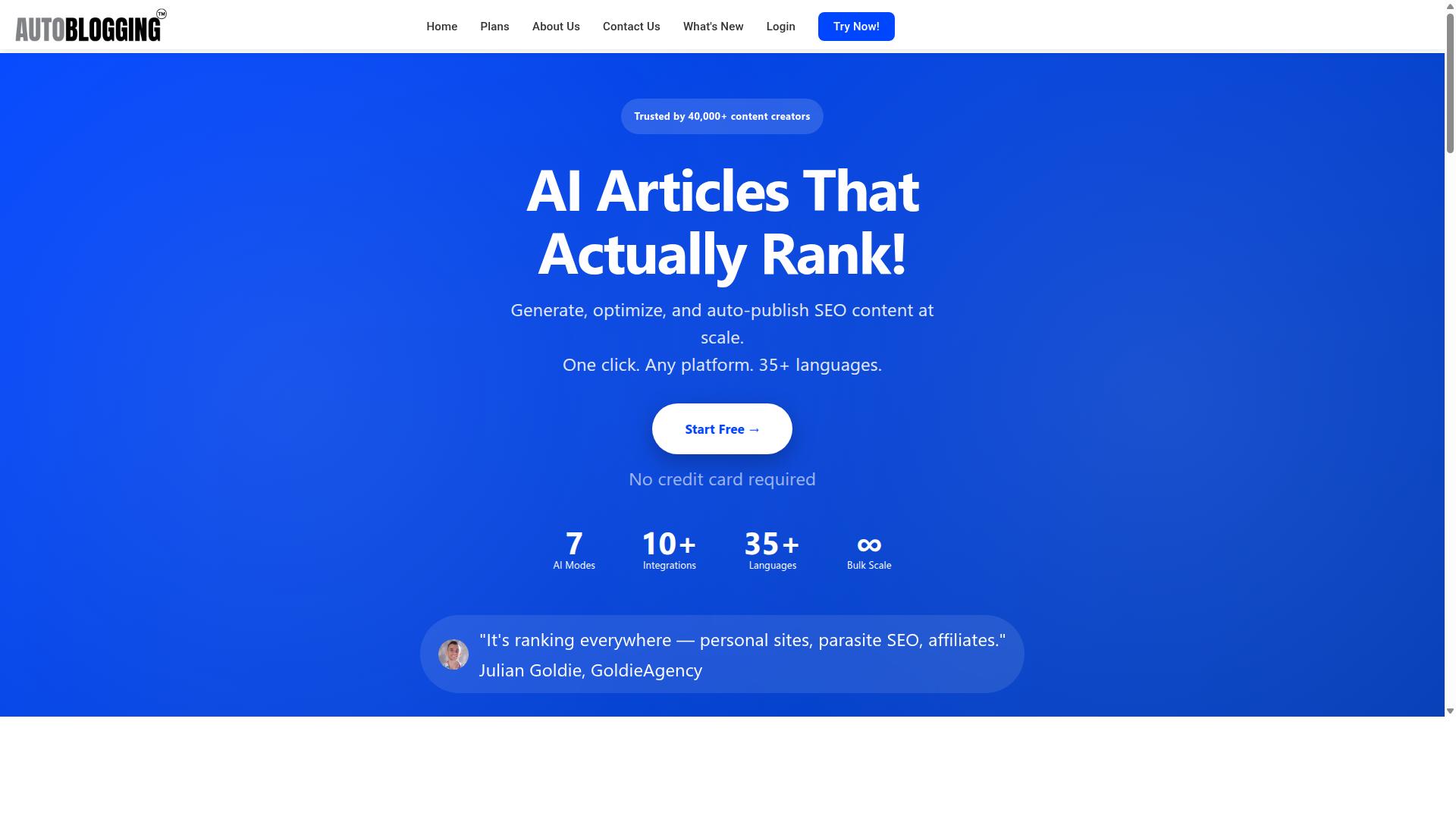
Autoblogging.ai earns the best-overall ranking because it combines 10+ AI modes with bulk generation of up to 500 articles in one run. Content managers need reliable output at scale. This platform delivers both speed and volume without extra configuration steps.
More than 40,000 content creators trust the service for consistent results. The platform has generated over 1 million articles across different niches and industries. Users maintain a 4.9 average rating based on actual performance metrics.
New features appear every week through regular platform updates. This cadence keeps the tool competitive with emerging AI capabilities. Content teams benefit from improvements without waiting for major version releases.
Key Features and AI Modes
Autoblogging.ai offers Quick Mode for single articles and Godlike Mode that performs SERP competitor analysis plus knowledge graph extraction. Quick Mode supports both free single generation and a guided wizard approach. Users can create one article at a time with minimal setup requirements.
Godlike Mode analyzes top search results to identify LSI keywords and extract relevant knowledge graphs. This process strengthens topical authority before writing begins. The mode produces content that aligns with existing high-ranking material.
Bulk Generation handles up to 500 articles simultaneously through CSV file uploads. Content managers can queue large batches for automated creation. This capability reduces manual effort during content calendar execution.
Pricing and Credit System
Autoblogging.ai uses a credit-based system that starts at $19 per month for 40 credits and scales to $999 for 5,000 credits. Each tier addresses different production volumes that teams require. The structure allows users to match spending with actual output needs.
Starter costs $19 monthly for 40 credits. Regular costs $49 for 120 credits. Standard costs $99 for 300 credits. Gold costs $179 for 600 credits. Premium costs $249 for 1,000 credits. Enterprise costs $999 for 5,000 credits.
Annual plans reduce monthly rates across all tiers. Credits roll over month to month without expiration. New accounts receive 10 free credits automatically each month without requiring payment details.
2. Sudowrite
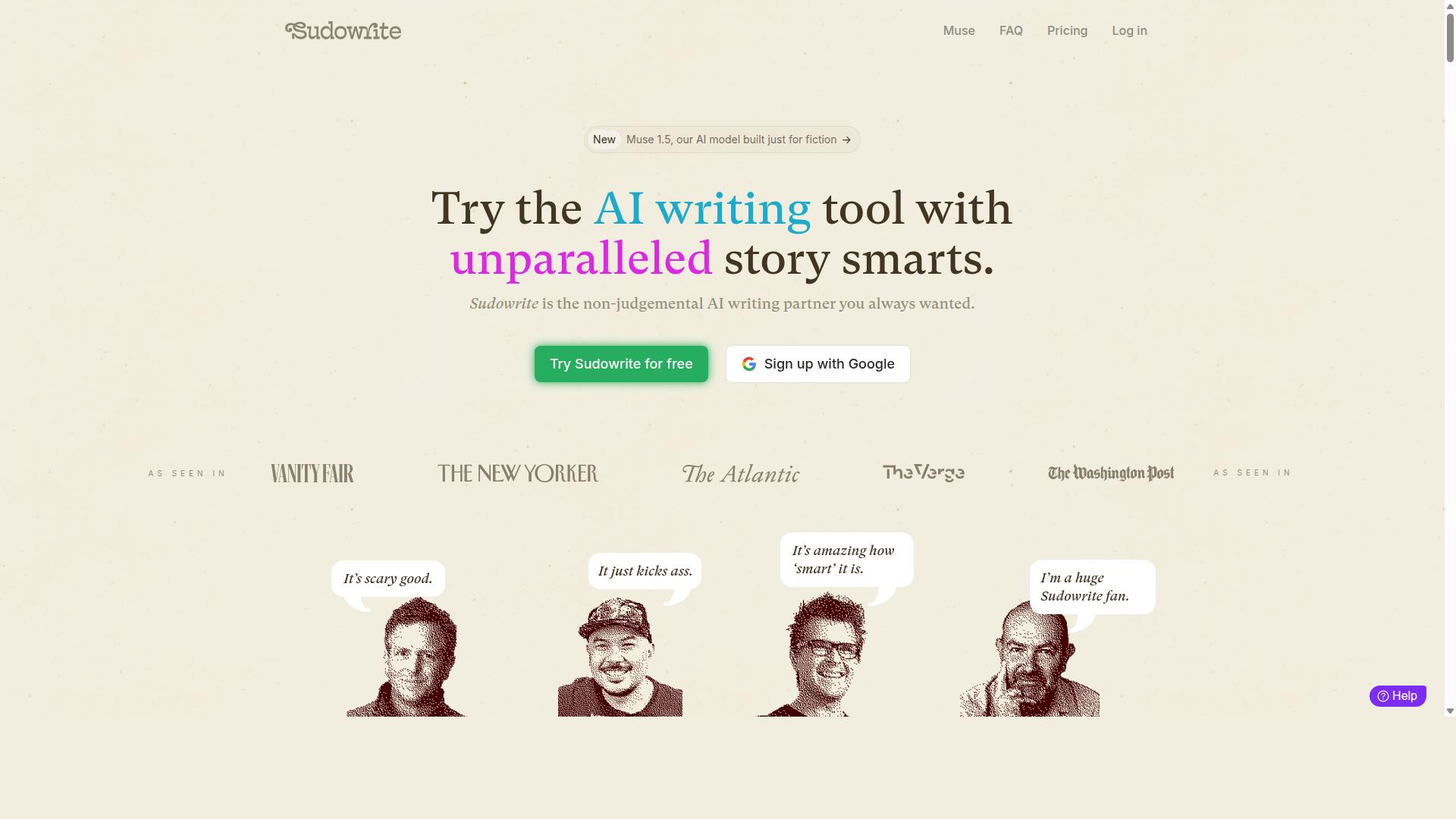
Sudowrite focuses on fiction writers and offers story-structure tools rather than SEO content creation features. The platform uses its own AI model called Muse, trained only on fictional storytelling.
This AI writing tool helps authors adjust style, tone, or pacing in seconds. Users can expand or shorten story parts instantly while maintaining creative flow.
Sudowrite also supports rewriting sentences or paragraphs while keeping emotional tone. Writers can brainstorm character ideas, plots, or twists through its brainstorming tools.
The tool produces emotional, vivid, naturally written fictional stories that read like real human work. Content managers seeking an AI article writer for SEO content creation will find this focus limits its value.
Sudowrite lacks bulk generation and SERP analysis. These missing features make it less suitable for automated writing assistant tasks in a content calendar or editorial workflow.
Users can start with a free trial via the website. Fiction authors who need tone adjustment and output customization may find the platform helpful for creative projects.
3. WriteSonic
WriteSonic provides templates for marketing copy and landing pages with limited long-form SEO controls.
Template variety stands as the main strength for this platform. Content managers find options for product descriptions, ad copy, and social media posts all in one place.
The tool lacks bulk article generation features. Teams handling multiple blog posts per week must process each piece individually instead.
Users access over 100 templates for different content types. Marketing teams benefit from the variety when creating campaign materials across channels.
Long-form SEO controls remain restricted compared to specialized alternatives. Content managers focused on search optimization may need additional tools for keyword integration and topic research.
The platform works well for short marketing copy and ecommerce descriptions. Teams requiring extensive blog post generation often explore other best AI writing tools for their editorial workflow.
4. Anyword
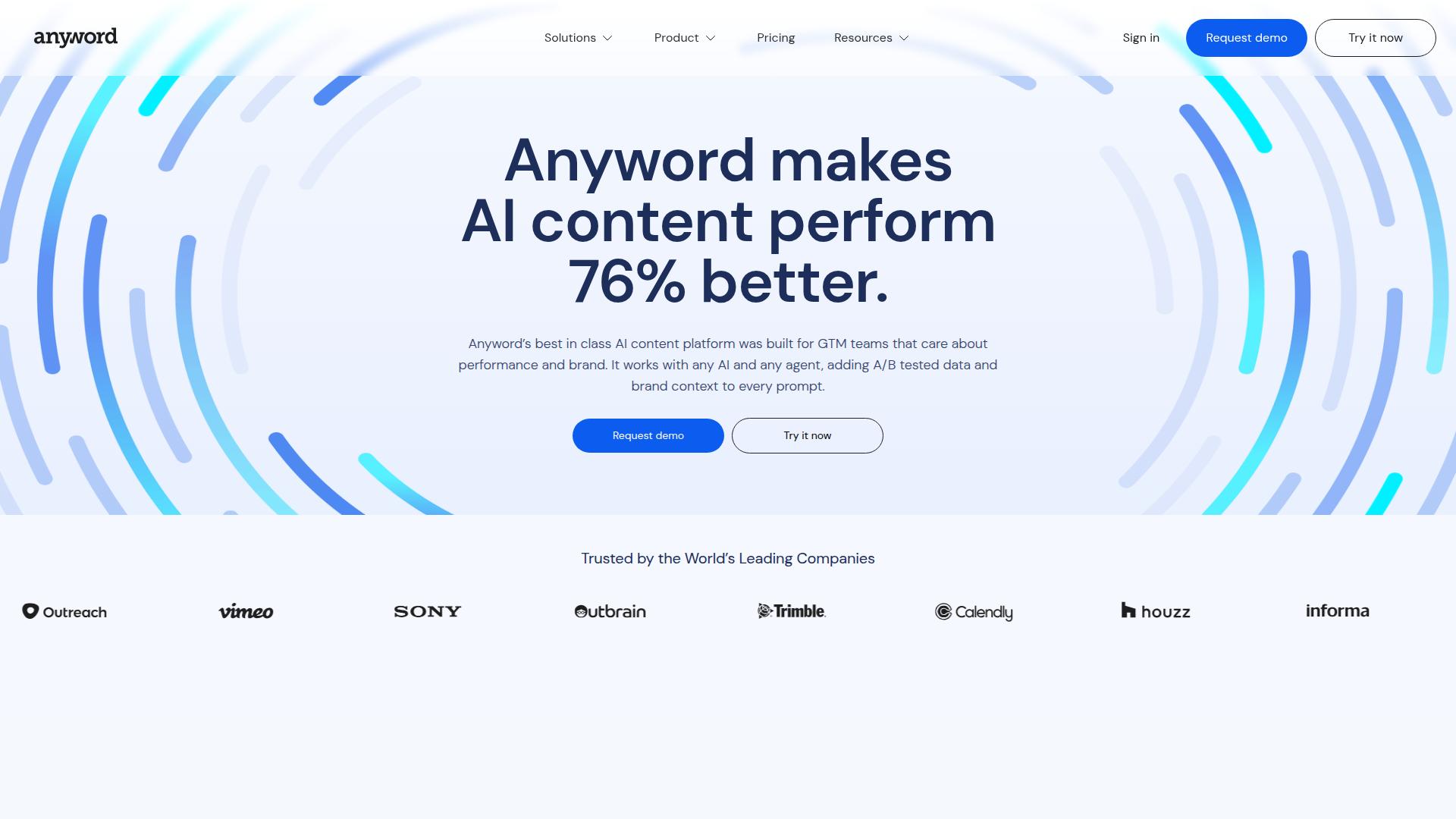
Anyword emphasizes brand voice consistency and performance scoring for ad copy and social posts. This tool stands out among best AI writing tools because it assigns performance prediction scores to generated content.
Content managers use these scores to gauge how well their copy might perform before publishing. The platform focuses heavily on marketing material and short-form content rather than extensive articles.
Anyword is a data-driven AI content writer focused on optimizing copy. It provides 2,500 words for 7 days free. Paid plans start at $24 for 20,000 words. The tool helps users refine messaging across multiple channels with data-backed insights.
Users should note that this AI article writer does not include integrated keyword research or bulk blog post generation. Those seeking an automated writing assistant for large-scale SEO content creation may need additional tools to support topic research AI and long-form content needs.
Performance scoring gives content managers actionable feedback on tone adjustment and output customization. This approach suits editorial workflows centered on ad campaigns and social media rather than full blog post generator capabilities.
Experts recommend evaluating whether your content calendar requires heavy focus on marketing copy optimization or broader natural language generation. Anyword serves specific use cases effectively while leaving room for complementary AI content generation solutions.
5. Canva Magic Write

Canva Magic Write is embedded inside Canva and generates short copy blocks for design projects. This tool works best when your content needs fit within visual templates rather than standalone articles. Content managers seeking an AI article writer for long pieces may find the scope limited.
The system provides 25 queries free before requiring payment. Paid plans start at $12.99 for 75 queries after that point. Users stay inside the Canva interface throughout the process.
Canva Magic Write suits teams focused on social media graphics and quick captions. The tool ties directly to visual design workflows rather than full publishing pipelines. Content managers often pair it with other platforms for complete article development.
Research suggests best AI writing tools differ based on output length and export needs. This option stays tied to design projects instead of offering standalone SEO content creation. Long-form article exports remain unavailable through this integration.
Content managers who need SEO content creation or blog post generator features may look elsewhere. The system prioritizes short copy blocks over extended editorial work. Automated writing assistant capabilities stay focused on visual-first tasks.
6. Jasper

Jasper supplies marketing-focused templates and integrates with some project management tools.
This AI article writer helps content managers maintain brand voice across campaigns. Users select templates for blog posts, social media, or email sequences.
The template library speeds up routine writing tasks. Content teams apply consistent messaging without starting from scratch each time.
Jasper focuses on long-form content and brand guidelines. Paid plans start at $24 for 20,000 words with a free trial offering 10,000 words for five days.
It does not provide SERP competitor analysis or bulk generation of 500-article batches. Content managers seeking those features may need additional tools in their workflow.
Teams use Jasper to create marketing copy aligned with established brand guidelines. The platform supports extended articles and promotional content through its structured templates.
7. ChatGPT
ChatGPT serves as a conversational GPT-based writer that requires manual prompting for each article section.
Content managers often need an AI article writer that handles more than basic text generation. ChatGPT works well for drafting ideas or single responses but lacks the structured support required for ongoing publishing schedules.
SEO content creation demands keyword integration, topic clusters, and bulk export options. ChatGPT does not include these features, so teams must copy content manually into other platforms.
Editorial workflow becomes difficult when multiple writers and editors need to review and approve drafts. ChatGPT offers no built-in tools for version control or collaboration.
Research suggests that long-form content benefits from consistent tone and brand voice across posts. Users must repeat instructions in every prompt to maintain style.
Experts recommend pairing any GPT-based writer with dedicated platforms when managing a full content calendar. This approach adds steps and increases the chance of formatting errors.
ChatGPT provides unlimited words on a paid plan starting at $20. It remains a versatile option for general content generation and quick answers.
8. Ink

Ink combines SEO optimization with a readability score but offers limited bulk generation capacity. The tool focuses on helping content managers produce search-friendly material that still reads naturally. Users can see how well each piece matches target keywords while checking sentence complexity at the same time.
Readability scoring shows sentence length and word difficulty in real time. Content managers gain quick feedback on whether paragraphs feel too dense or too simple for their audience. This built-in check keeps long-form content both accessible and professional.
SEO scoring highlights keyword placement, heading structure, and overall search relevance. Writers adjust text on the spot to improve rankings without leaving the editor. The process supports editorial workflow by surfacing issues before publication.
The platform lacks 35-language multilingual support found in some competitors. Most users work in English only when they choose Ink for SEO content creation. This limits teams that need additional languages for global blog post generator projects.
Content managers who prioritize keyword research integration and output customization may still find value here. The system works well for smaller campaigns or solo writers focused on English blog content.
How to Choose the Right Option
Content managers should match tool capabilities to team size, required output volume, and SEO complexity.
Start by defining monthly article volume and language requirements. Bloggers and marketing agencies often need consistent multilingual support to reach wider audiences. SEO professionals typically require English-first output with strong keyword optimization capabilities.
Next, verify integration with your existing content calendar and plagiarism tools. This step prevents workflow disruptions when scaling AI content generation across multiple clients or sites. Automated writing assistants that connect directly with scheduling platforms reduce manual handoffs and errors.
Finally, compare credit rollover policies and support hours against your operational needs. Agencies managing client websites often benefit from flexible credit systems that accommodate fluctuating demand. Bloggers and affiliate marketers appreciate extended support windows when troubleshooting complex long-form content projects.
Autoblogging.ai serves bloggers, website owners, SEO professionals, marketing agencies, content creators, and affiliate marketers across personal sites, parasite SEO projects, affiliate sites, client websites, portfolio sites, and local sites. The platform handles diverse use cases without forcing content managers into rigid templates or limited output formats.
Final Verdict
Autoblogging.ai stands out for agencies and content managers that need scalable bulk generation plus 24/7 support. Content teams often compare several best AI writing tools before choosing one solution for daily production needs. The platform delivers results through verified capabilities rather than generic promises.
Agencies benefit from 35+ integrations that connect with existing editorial workflows. Credits rollover each month so teams avoid losing unused resources during slower periods. This flexibility supports consistent output across busy and quiet cycles.
Content managers work with audiences across regions using 35+ languages without switching platforms. Human proofreading comes standard with every plan to maintain quality standards. Teams catch errors before publication rather than after.
New features ship weekly so the platform evolves with changing market demands. The combination of automated writing assistant features and human oversight creates reliable editorial output. Agencies and teams gain a complete solution for AI content generation at scale.
Frequently Asked Questions
What criteria define the top picks in the 8 Best AI Article Writers for Content Managers?
The 8 Best AI Article Writers for Content Managers are selected based on output quality, SEO capabilities, ease of use, and integration with popular CMS platforms to help teams scale content efficiently.
How do the 8 Best AI Article Writers for Content Managers boost team productivity?
These tools automate research, drafting, and editing tasks, allowing content managers to produce more articles in less time while maintaining brand voice and accuracy across projects.
Which features matter most when evaluating the 8 Best AI Article Writers for Content Managers?
Look for customizable templates, real-time collaboration, plagiarism detection, and analytics dashboards that align with workflow needs in the 8 Best AI Article Writers for Content Managers.
Are the tools in the 8 Best AI Article Writers for Content Managers suitable for SEO-focused campaigns?
Yes, most include keyword optimization, meta tag generation, and readability scoring to improve search rankings and help content managers meet performance goals effectively.
What pricing considerations apply to the 8 Best AI Article Writers for Content Managers?
Options range from free tiers with limited outputs to premium subscriptions offering unlimited generations, making it easy to match budgets while accessing full capabilities in the 8 Best AI Article Writers for Content Managers.
How do the 8 Best AI Article Writers for Content Managers compare for long-form content creation?
Several excel at generating in-depth guides and reports with proper structure and citations, giving content managers reliable starting points that require minimal revisions.
Visit the writing desk